Industrial Machine Production Guide: AI, Automation & Smart Manufacturing Trends
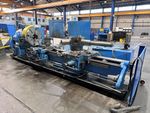
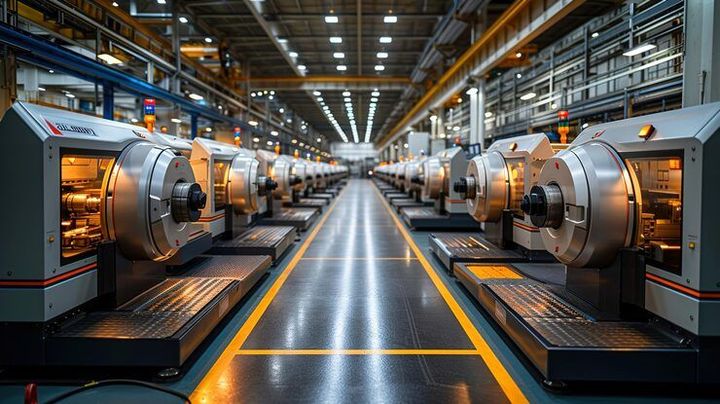
Industrial machine production refers to the planning, design, manufacturing, assembly, testing, and improvement of machines used in factories and industrial environments. These machines can include CNC equipment, material handling systems, packaging machinery, forming equipment, industrial robots, inspection systems, and automated production lines.
The field exists because modern industries need reliable equipment that can perform repeatable tasks with consistent quality. As manufacturing processes have become more complex, machine production has also moved beyond traditional mechanical engineering.
Today, industrial machine production often combines:
- Mechanical engineering
- Electrical and electronic systems
- Industrial automation
- Programmable logic controllers
- Robotics
- Artificial intelligence
- Industrial Internet of Things (IIoT)
- Machine vision
- Data analytics
- Digital twin technology
- Predictive maintenance
A traditional machine may perform a specific physical operation. A smart machine can also collect information about its operating condition and use that information to support monitoring, quality control, maintenance planning, and process improvement.
This transition is an important part of Industry 4.0 and smart manufacturing.
Why Industrial Machine Production Matters Today
Manufacturing industries operate in an environment where production quality, equipment reliability, energy efficiency, worker safety, and supply-chain resilience all matter. Industrial machines influence many of these areas.
For manufacturers, automation can reduce repetitive manual activity and provide more consistent process control. Sensors and industrial data systems can also help identify unusual machine behavior before it develops into a major production interruption.
Artificial intelligence is becoming particularly relevant. In manufacturing, AI can be used for predictive maintenance, defect detection, demand forecasting, production scheduling, process monitoring, and machine-performance analysis.
NITI Aayog's recent manufacturing roadmap identifies AI and machine learning, digital twins, robotics, and advanced materials as important technologies for India's advanced manufacturing development.
The impact extends across different groups:
- Manufacturing engineers use automation and data to improve production processes.
- Machine designers integrate sensors, controls, and software into equipment.
- Factory operators interact with automated machinery and digital control systems.
- Maintenance teams use machine data to identify equipment conditions.
- MSMEs can use selected digital technologies to improve monitoring and resource management.
- Quality teams use machine vision and data analytics to identify production variations.
The objective is not simply to make machines more complicated. Good industrial machine production focuses on creating equipment that is appropriate for the intended process, safe to operate, maintainable, and capable of producing consistent results.
Major Technologies Used in Smart Machine Production
Several technologies are shaping modern industrial equipment.
Artificial Intelligence in Manufacturing
AI manufacturing systems can analyze large amounts of operational data. For example, algorithms can examine vibration, temperature, pressure, current, or production-quality information.
Common applications include:
- Predictive maintenance
- Machine anomaly detection
- Automated quality inspection
- Production scheduling
- Process optimization
- Energy monitoring
- Demand forecasting
AI should be implemented with appropriate data quality, human oversight, cybersecurity controls, and performance testing.
Industrial Automation
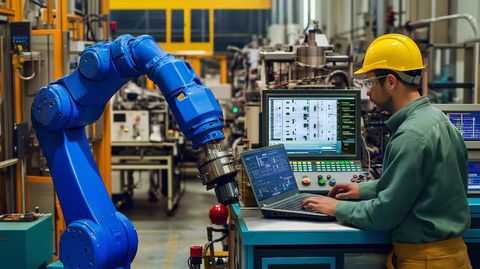
Industrial automation combines controllers, sensors, actuators, drives, robots, and software to control production processes.
A modern automated machine may continuously monitor operating conditions and adjust certain parameters according to programmed rules.
Automation is particularly useful for repetitive operations where consistent timing and process control are important.
Industrial IoT
Industrial IoT connects machines, sensors, controllers, and information systems so operational data can be collected and analyzed.
A basic IIoT architecture may include:
| Layer | Typical Function |
|---|---|
| Sensors | Capture machine conditions |
| Controllers | Manage machine operations |
| Network | Transfer operational data |
| Data platform | Store and organize information |
| Analytics | Identify patterns and abnormalities |
| Dashboard | Display useful information |
This structure helps turn machine activity into usable operational information.
Digital Twins
A digital twin is a digital representation of a physical machine, production line, or industrial process.
It can be used to study machine behavior, test scenarios, monitor performance, or evaluate possible process changes without immediately changing the physical system.
Digital twins are becoming more relevant as factories integrate engineering data with real-time operational information.
Robotics and Machine Vision
Industrial robots can handle repetitive movement, assembly, welding, material handling, and other controlled processes.
Machine vision systems use cameras and image-processing techniques to inspect components or monitor production conditions.
When robotics and machine vision are combined, automated systems can perform physical operations while checking selected quality characteristics.
Recent Industrial Manufacturing Updates
The period from late 2025 through 2026 has seen increased attention on AI-enabled and advanced manufacturing in India.
In October 2025, NITI Aayog released its Reimagining Manufacturing roadmap. It highlighted AI and machine learning, digital twins, robotics, and advanced materials across 13 priority manufacturing sectors.
In February 2026, a government-industry-academia discussion at the India AI Impact Summit focused specifically on AI for Manufacturing Engineering Technology. A proposed AI-MET framework emphasized responsible and scalable AI adoption, skills development, productivity, and industrial innovation.
Another February 2026 consultation examined the development of an Advanced Manufacturing Systems Mission. The discussion involved government bodies, industry groups, MSMEs, startups, academia, research institutions, and technology developers.
Industrial AIoT also received attention in May 2026. The Technology Development Board supported a project focused on AIoT-based industrial solutions for resource efficiency, energy optimization, predictive maintenance, and manufacturing productivity.
Government data published in July 2026 reported that India's PLI schemes across 14 sectors had attracted more than ₹2.40 lakh crore in investment as of March 31, 2026.
These developments show a broader movement toward connected equipment, advanced manufacturing technologies, domestic production capabilities, and AI-enabled industrial systems.
Industrial Machine Production and Key Policy Frameworks
India's manufacturing sector is influenced by several national and state-level policies. The National Manufacturing Mission, announced in the Union Budget 2025–26, focuses on areas such as ease of doing business, a future-ready workforce, MSMEs, technology availability, and product quality.
The Production Linked Incentive framework also covers 14 strategic sectors. Government figures published in March 2026 reported more than ₹2.16 lakh crore in cumulative investment under these schemes as of December 31, 2025.
For industrial machine production, workplace safety is another important area. India's Occupational Safety, Health and Working Conditions Code, 2020 contains provisions concerning occupational safety and health. Draft rules relating to factory workers were published for consultation in September 2025, illustrating that implementation details and regulatory requirements can develop over time.
Manufacturing facilities should therefore check the rules applicable to their specific industry, location, machinery, workforce, environmental conditions, and production activity. State-level requirements can also be relevant.
Policy Area and Manufacturing Relevance
| Policy Area | Possible Manufacturing Impact |
|---|---|
| National Manufacturing Mission | Technology, skills, MSMEs, quality, industrial development |
| PLI framework | Support for selected strategic manufacturing sectors |
| Occupational safety rules | Machine safety and workplace protection |
| Industrial infrastructure programs | Industrial clusters and connected manufacturing ecosystems |
| AI initiatives | AI adoption, computing capacity, and technology development |
| Skill development programs | Training for advanced manufacturing technologies |
Policy conditions can change, so manufacturers should verify the latest applicable requirements before making compliance decisions.
Tools and Resources for Industrial Machine Production
Several categories of tools can help engineers, manufacturers, students, and researchers understand industrial machine production.
Engineering and Design Tools
Useful categories include:
- Computer-aided design software
- Computer-aided manufacturing software
- Engineering simulation tools
- Finite element analysis software
- Electrical design tools
- Process planning templates
Automation and Control Resources
Learning resources can include:
- PLC programming environments
- HMI design tools
- Industrial network simulators
- Robotics programming environments
- Sensor configuration tools
- Motor and drive calculators
Manufacturing Data Tools
For smart manufacturing, useful resources include:
- OEE calculators
- Energy monitoring dashboards
- Predictive maintenance templates
- Production planning spreadsheets
- Downtime analysis templates
- Quality-control dashboards
- Machine performance reports
Learning Resources
Beginners can start with:
- Industry 4.0 introductory courses
- Manufacturing engineering textbooks
- Industrial automation tutorials
- Robotics fundamentals
- PLC programming guides
- AI and machine learning fundamentals
- Occupational safety documentation
- Government manufacturing policy documents
A useful learning approach is to understand the physical machine first and then study how sensors, controls, data, and AI can improve its operation.
Frequently Asked Questions
What is industrial machine production?
Industrial machine production is the process of designing, manufacturing, assembling, testing, and improving machines used in industrial and manufacturing environments.
How is AI used in industrial machines?
AI can analyze machine and production data for applications such as predictive maintenance, anomaly detection, quality inspection, scheduling, and process analysis.
What is smart manufacturing?
Smart manufacturing uses connected machines, automation, sensors, software, data analytics, and related technologies to monitor and manage production processes more intelligently.
Are robotics replacing all manufacturing processes?
No. Robotics are mainly used for tasks where automation is technically appropriate. Human workers continue to be important for engineering, supervision, maintenance, quality decisions, system development, and many other activities.
What skills are useful for modern machine production?
Useful skills include mechanical engineering, electrical systems, PLC programming, industrial automation, robotics, data analysis, CAD, machine vision, cybersecurity, and AI fundamentals.
Conclusion
Industrial machine production is moving from equipment focused mainly on mechanical operation toward connected and data-driven manufacturing systems. AI, industrial automation, robotics, IIoT, machine vision, and digital twins are becoming important parts of this transition.