Battery Electrode Coating Machines: Technology, Processes, and Applications
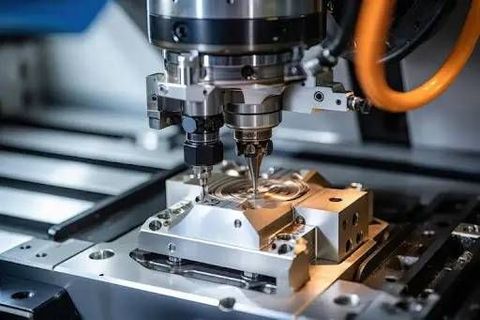
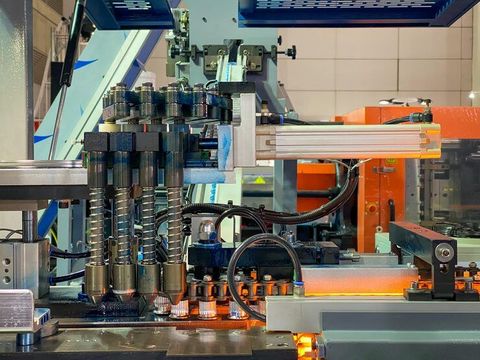
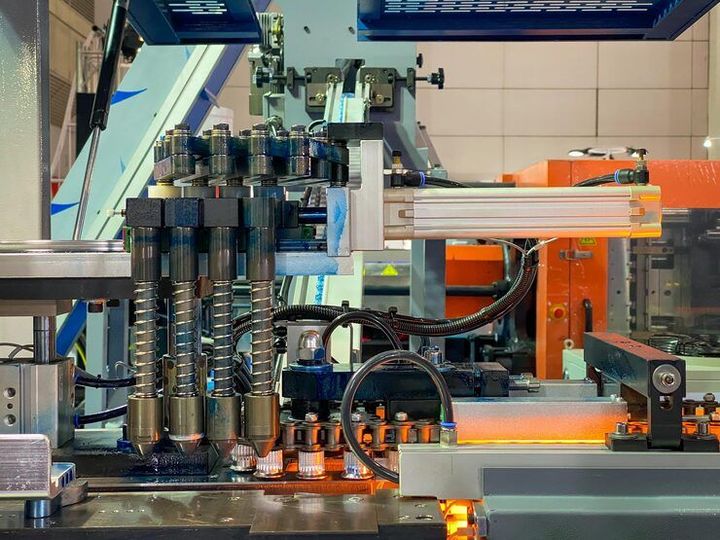
Battery electrode coating machines are specialized industrial systems used to apply a controlled layer of electrode material onto a thin metal foil. This process is an essential stage in producing many rechargeable batteries, particularly lithium-ion batteries used in electric vehicles, portable electronics, and stationary energy storage systems.
Battery electrode coating machines apply a carefully controlled layer of electrode material to a thin metal surface. The equipment must maintain consistent coating thickness, material distribution, and surface quality. Even small variations can affect battery capacity, charging behavior, production efficiency, and long-term reliability.
Understanding battery electrode coating technology helps explain how modern lithium-ion batteries and other rechargeable battery systems are manufactured. It also provides useful knowledge for engineers, production planners, equipment specialists, researchers, and students interested in advanced manufacturing.
Understanding Battery Electrode Coating Machines
What Is a Battery Electrode Coating Machine?
Cut the electrode roll into the required dimensions and prepare it for subsequent cell assembly.
The exact sequence varies by equipment design and battery chemistry. For example, dry coating does not require the conventional slurry-drying stage, although other consolidation and quality-control steps may still be necessary.
Recent Updates and Emerging Trends
Battery electrode manufacturing continues to develop as researchers explore ways to improve energy density, production consistency, and environmental performance.
Growth of Dry Electrode Manufacturing
During 2025 and 2026, dry electrode processing remained an important research and industrial development area. In June 2025, Fraunhofer IWS reported progress in solvent-free electrode production. The research highlights efforts to simplify manufacturing while improving coating precision.
New Approaches to Electrode Materials
Research published in July 2025 by Oak Ridge National Laboratory described the use of longer carbon fibers to improve the strength and conductivity of dry-processed electrode films. This illustrates how material design and coating equipment development influence one another.
Manufacturers are increasingly interested in combining coating equipment with automated inspection and process monitoring. Potential developments include:
Sensors that measure coating thickness and surface variations.
Machine vision systems that identify defects during production.
Digital process records for tracking manufacturing conditions.
Automated controls that adjust coating parameters when variations occur.
Data analysis tools that help identify recurring defects and maintenance needs.
These technologies can support more consistent manufacturing, but their effectiveness depends on sensor accuracy, system integration, and appropriate process validation.
Summary of Major Technology Trends
Development | Main objective | Current consideration |
|---|---|---|
Dry electrode processing | Reduce reliance on liquid solvents | Film strength and uniformity |
Advanced coating heads | Improve material distribution | Formulation compatibility |
Automated inspection | Detect defects earlier | Measurement accuracy |
Digital process monitoring | Improve process visibility | Data quality and integration |
Alternative binders | Support new material systems | Adhesion and durability |
These trends indicate possible directions for battery manufacturing rather than guarantees of widespread commercial adoption.
Laws, Policies, and Manufacturing Standards
Battery electrode coating machines are affected by workplace safety requirements, environmental regulations, machinery safety rules, and standards governing finished batteries. The applicable requirements depend on the country, factory location, materials used, and intended battery market.
European Union Battery Regulations
The European Union's Battery Regulation, Regulation (EU) 2023/1542, establishes requirements concerning battery sustainability, safety, labeling, material information, and waste management. It began applying on 18 February 2024, with different provisions following specific implementation schedules.
India and Other Manufacturing Markets
In India, battery manufacturers may need to consider applicable provisions of the Batteries (Management and Handling) Rules, 2001, as amended, and the Battery Waste Management Rules, 2022, including subsequent amendments. The latter framework addresses extended producer responsibility and battery waste management.
Factories must also assess relevant occupational safety, electrical safety, fire prevention, hazardous-material handling, air-emission, and waste-management requirements. Specific obligations depend on the facility and process.
Important Compliance Considerations
Manufacturing facilities should evaluate:
Machine guarding and emergency-stop systems.
Electrical protection and safe equipment operation.
Ventilation and solvent exposure controls for wet processes.
Safe handling of reactive powders and chemical mixtures.
Fire prevention and appropriate storage conditions.
Waste collection, recycling, and environmental reporting.
Documentation, traceability, and inspection records.
Compliance should be assessed by qualified safety and regulatory personnel. A machine meeting one technical standard does not automatically satisfy every legal requirement in every country.
Tools and Resources for Battery Coating Technology
Process Monitoring and Quality Control Tools
Manufacturers and researchers use several categories of tools to evaluate electrode quality and improve process stability.
Thickness measurement instruments: Measure coating thickness and help identify variations across the electrode.
Precision weighing equipment: Measures coating mass per unit area, an important indicator of electrode loading.
Viscosity measurement instruments: Help assess slurry flow behavior before wet coating.
Optical inspection systems: Identify visible defects, streaks, pinholes, and surface irregularities.
Moisture analyzers: Help verify drying conditions and residual moisture where relevant.
Laboratory testing equipment: Evaluates adhesion, porosity, electrical properties, and mechanical strength.
Data analysis software: Organizes process measurements and helps identify patterns in production quality.
Learning and Process Planning Resources
Engineers can use technical manuals, materials science textbooks, laboratory procedures, process flow diagrams, and equipment maintenance checklists to understand electrode manufacturing.
A basic process checklist should record:
Electrode material and formulation.
Current collector type and dimensions.
Coating method and target thickness.
Drying or consolidation conditions.
Inspection results and defect observations.
Equipment maintenance and calibration history.
For research projects, recording the relationship between process settings and electrode performance can help make experiments more repeatable.
Frequently Asked Questions
What is the main function of a battery electrode coating machine?
Its main function is to apply electrode material uniformly to a current collector. The resulting electrode is used in a battery cell and influences its electrical performance, manufacturing consistency, and reliability.
What is the difference between wet and dry electrode coating?
Wet coating applies a liquid mixture of active materials, binders, and conductive additives, followed by drying. Dry coating forms an electrode layer without the conventional liquid-slurry process, potentially reducing solvent use and drying requirements.
Which materials are commonly used for electrode coating?
Common materials include graphite for many lithium-ion battery anodes, lithium-containing compounds for cathodes, conductive additives, binders, and suitable processing media. The exact formulation depends on the battery chemistry and design.
How is electrode coating quality measured?
Quality can be assessed through coating thickness, mass loading, surface uniformity, adhesion, porosity, moisture content, and electrical characteristics. Different tests are selected according to the electrode material and manufacturing requirements.
What factors should manufacturers consider when selecting coating equipment?
Important factors include battery chemistry, electrode width, coating thickness, production speed, material compatibility, drying requirements, inspection capability, environmental controls, and integration with other manufacturing stages.
Conclusion
Battery electrode coating machines are essential to the production of modern rechargeable batteries. They help transform prepared electrode materials into controlled layers that support energy storage and electrical performance.