Robotic Deburring Machines: Types, Technology, and Industrial Applications
Robotic deburring machines are automated manufacturing systems designed to remove burrs, sharp edges, and unwanted material projections from components. These imperfections commonly appear after drilling, milling, stamping, casting, laser cutting, and other industrial processes.
A burr may seem small, but it can affect component assembly, surface quality, dimensional accuracy, and workplace safety. Robotic deburring systems use programmable industrial robots, specialized finishing tools, sensors, and control software to perform these operations consistently.
Traditional deburring often involves manual grinding, filing, or brushing. These methods remain useful for small batches and specialized components, but results can vary depending on operator technique and fatigue. Robotic systems help standardize repetitive tasks and follow programmed finishing paths.
Industries such as automotive manufacturing, aerospace engineering, metal fabrication, electronics, and heavy machinery use deburring processes to prepare components for assembly, coating, inspection, or final use.
The main objective is to remove unwanted material without damaging the component's intended shape, dimensions, or functional surfaces.
How the Robotic Deburring Process Works
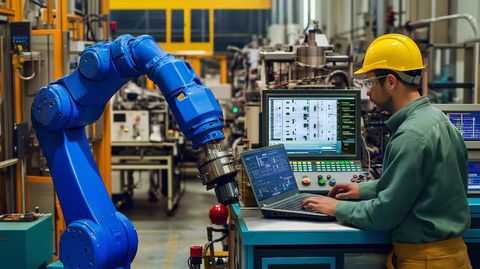
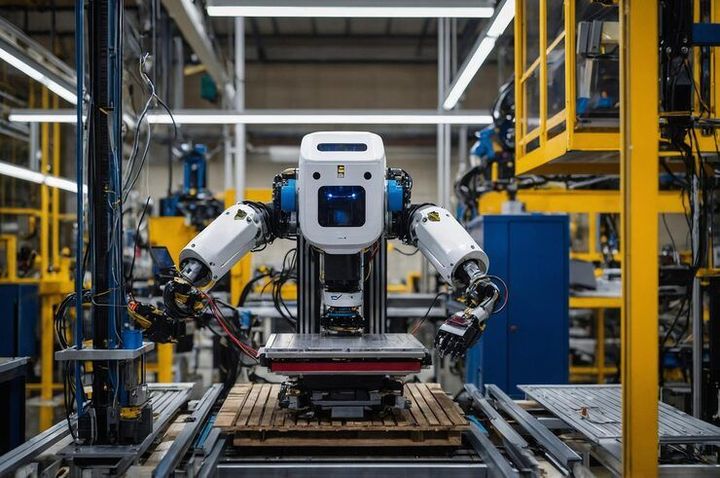
A robotic deburring cell usually combines a robot arm, a tool spindle, component fixtures, a control system, and protective equipment.
The production process generally follows these steps:
Component positioning: A fixture or automated handling system holds the part securely.
Path programming: Engineers define the robot's movements using programmed coordinates, teaching methods, or digital models.
Tool selection: A suitable abrasive brush, grinding wheel, rotary file, or cutting tool is selected.
Edge finishing: The robot moves the tool along designated edges while following specified operating parameters.
Quality inspection: Measurements and visual checks confirm whether the finished part meets its requirements.
Some systems include force sensors or compliant tool holders. These help maintain suitable contact pressure when surfaces are uneven or component dimensions vary slightly.
The correct process depends on material hardness, burr size, component geometry, surface finish requirements, and production volume.
Why Robotic Deburring Matters in Modern Manufacturing
Improving Product Quality and Consistency
Manufacturers need components that fit together correctly and meet specified engineering tolerances. Remaining burrs can interfere with assembly, damage seals, affect moving parts, or create unwanted stress concentrations in certain applications.
Robotic deburring helps maintain repeatable finishing movements across multiple components. When combined with suitable inspection equipment, it can also make quality problems easier to identify and investigate.
Important benefits include:
More consistent edge finishing across production batches.
Reduced direct handling of sharp components.
Better control over repetitive grinding and brushing operations.
Improved traceability through recorded production parameters.
More predictable finishing processes for suitable high-volume applications.
These benefits are not automatic. Tool wear, incorrect programming, poor component positioning, and unsuitable process settings can still lead to defects.
Supporting Industrial Productivity
Robotic deburring can perform repetitive finishing tasks with less dependence on continuous manual tool handling. This can help manufacturers organize production workflows and allocate workers to programming, inspection, maintenance, and other activities.
Automated cells may also connect with conveyor systems, robotic material handling, and manufacturing execution systems.
However, the overall effect on productivity depends on setup time, tooling changes, robot cycle time, maintenance needs, and the number of components processed. Complex parts may require several finishing stages or additional inspection.
Comparing Manual and Robotic Deburring
Factor | Manual deburring | Robotic deburring |
|---|---|---|
Process control | Depends heavily on operator technique | Uses programmed movements and settings |
Repeatability | Can vary between operators | Can be consistent with validated programs |
Component flexibility | Adaptable for occasional tasks | Requires suitable programming and fixtures |
Initial setup | Often relatively simple | Requires cell design and integration |
Quality monitoring | May rely on manual inspection | Can integrate sensors and automated inspection |
Best suited to | Small batches and specialized work | Repetitive or structured production tasks |
Neither approach is suitable for every situation. Manufacturers should evaluate component complexity, required finish, production volume, and inspection needs before choosing a process.
Types of Robotic Deburring Machines
Robotic Grinding Systems
These systems use abrasive wheels, grinding heads, or similar tools to remove larger burrs and irregular edges from metal components.
Common applications include castings, machined housings, fabricated structures, and industrial metal parts. Tool selection must account for material hardness and the amount of material that can safely be removed.
Robotic Brushing Systems
Robotic brushing systems use abrasive or wire brushes to remove smaller burrs and improve edge consistency. They are used for selected aluminum parts, machined components, and metal products requiring controlled surface finishing.
Brush selection, rotation speed, and contact pressure influence the result. Excessive pressure can damage delicate edges or create an inconsistent finish.
Robotic Milling and Rotary Filing Systems
These systems use cutting tools or rotary files to remove localized burrs around holes, slots, grooves, and complex profiles.
They can be useful when the location of a burr requires precise tool positioning. Engineers must carefully control tool paths to avoid altering important dimensions.
Force-Controlled Robotic Systems
Force-controlled systems use sensors, compliant mechanisms, or specialized tool holders to regulate contact between the tool and component.
They are particularly useful for selected irregular surfaces where fixed robot movements alone may not maintain consistent contact.
Vision-Guided Deburring Systems
Vision-guided systems use cameras and image-processing software to locate components, recognize selected edges, and adjust robot paths when supported by the equipment.
They can help accommodate differences in part position and orientation. Reliable performance depends on lighting, image quality, camera calibration, and the ability of the software to recognize the required features.
Key Technologies Used in Robotic Deburring
Modern automated finishing cells may combine several technologies to coordinate robot movement, control tool contact, and monitor quality.
Technology | Main function |
|---|---|
Industrial robot controllers | Coordinate robot movements and operating sequences |
Programmable logic controllers | Manage machine signals and production sequences |
Force and torque sensors | Measure tool contact and applied forces |
Machine vision | Locate parts and inspect selected features |
Offline programming software | Develop and simulate robot paths |
Spindle monitoring | Track selected tool operating conditions |
Manufacturing data systems | Record production, inspection, and maintenance information |
These systems can exchange data to support more coordinated manufacturing.
For example, a vision system may identify the position of a component before finishing begins. The robot controller then follows the appropriate path, while a force sensor helps regulate contact with the surface.
Engineers can review recorded measurements to investigate quality variations and refine validated process settings.
Recent Developments and Trends in 2025–2026
Industrial robotic finishing continues to develop through improvements in sensing, programming, and production integration. Several trends are shaping how manufacturers approach deburring.
More Adaptive Automation
Force-feedback systems and vision-guided programming help robots respond to selected variations in part position and surface geometry. This is important when manufactured components are not perfectly identical.
Digital Simulation and Offline Programming
Engineers can develop robot paths in a virtual environment before testing them on production equipment. Simulation can help identify potential collisions, tool-access problems, and inefficient movements.
Physical trials are still necessary to confirm actual finishing quality and operating conditions.
Tool Wear Monitoring
Worn tools can produce inconsistent edges, longer processing times, or unwanted surface damage. Monitoring spindle behavior, tool usage, and inspection results can help maintenance teams identify when tools require attention.
Integration With Smart Factories
Robotic deburring cells can connect with production tracking, inspection databases, and maintenance systems. These connections support better visibility into machine performance and recurring quality problems.
The level of automation varies widely between facilities. Advanced sensing and integrated data systems are not included in every robotic deburring machine.
Laws, Policies, and Workplace Safety
Robotic deburring involves moving robot arms, rotating tools, abrasive particles, sharp workpieces, noise, and potentially hazardous dust. Safety planning is therefore essential during equipment design, installation, and operation.
In India, manufacturers should review applicable occupational safety legislation, state factory requirements, electrical safety provisions, and environmental rules.
The Occupational Safety, Health and Working Conditions Code, 2020, came into force on November 21, 2025, according to official government announcements. Establishments should check the applicable provisions and related rules for their specific operations.
Environmental requirements may also apply to dust extraction, waste handling, and disposal of used abrasives or metal residues.
Internationally, ISO 12100 provides a framework for machinery risk assessment and risk reduction. Relevant industrial robot and electrical equipment standards may also apply, depending on the configuration and intended market.
Important safety measures include:
Physical guarding and appropriately designed access doors.
Emergency-stop systems and safety interlocks.
Suitable extraction for dust and airborne particles.
Personal protective equipment where required.
Safe procedures for tool changes and maintenance.
Operator training and documented risk assessments.
Applicable requirements should be verified with the relevant authorities and qualified safety professionals.
Tools and Resources for Robotic Deburring
Manufacturing teams can use several types of tools to plan, operate, and evaluate automated finishing processes.
Robot simulation software: Develops robot paths and checks reach and collision risks.
Surface roughness testers: Measures surface characteristics against specified requirements.
Force and torque sensors: Monitors contact during finishing operations.
Machine vision systems: Helps locate parts and inspect selected edges.
Statistical process control tools: Tracks quality measurements and identifies unusual variation.
Maintenance checklists: Records spindle condition, tool wear, fixture inspections, and equipment faults.
Risk assessment templates: Documents hazards, safeguards, and safe operating procedures.
A practical starting point is to test representative components before production begins. Engineers should measure edge quality, dimensional accuracy, tool wear, and cycle time to determine whether the process meets the required specifications.
Frequently Asked Questions
What is the main purpose of a robotic deburring machine?
Its main purpose is to remove unwanted burrs and sharp edges from manufactured components using programmed, repeatable finishing operations.
Which materials can robotic deburring systems process?
Depending on the machine and tooling, they can process steel, stainless steel, aluminum, selected alloys, and certain other materials. The process must be adapted to each material's properties.
How does force control improve deburring?
Force control helps maintain appropriate tool contact when component surfaces or burr dimensions vary. This can improve consistency, although correct programming and inspection remain necessary.
Can robotic deburring machines process different component designs?
Yes. Programmable systems can process different components when appropriate tools, fixtures, programs, and validated settings are available. Some changes require additional setup and testing.
What should manufacturers evaluate before selecting a system?
Important factors include component geometry, material type, burr size, dimensional tolerances, surface finish, production volume, tool maintenance, safety requirements, and inspection methods.
Conclusion
Robotic deburring machines help manufacturers remove unwanted edges and improve the consistency of component finishing. Grinding, brushing, rotary filing, force control, and machine vision support different production requirements.