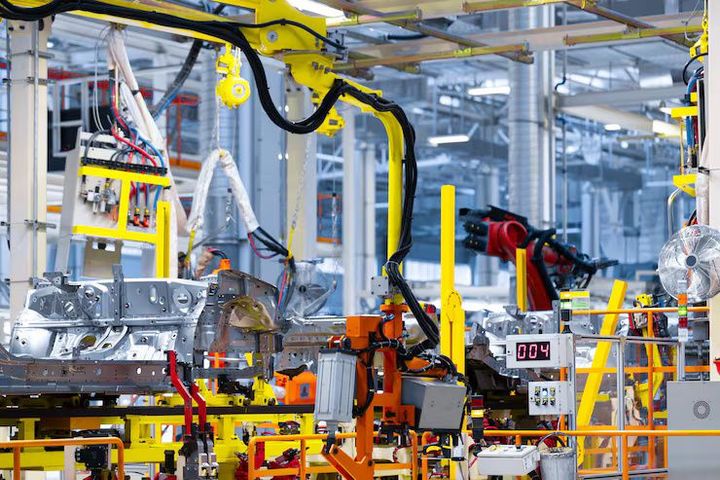
Hydraulic Press Machines: Insights on Automation, Safety & Efficiency
Hydraulic press machines are industrial machines that use hydraulic fluid and pressure to generate controlled force. A hydraulic pump moves fluid through a system, creating pressure that drives a cylinder and moves a ram. The ram then applies force to a workpiece placed between suitable tooling or dies.
The basic principle is based on hydraulic pressure. Unlike some mechanical pressing systems, a hydraulic press can apply force through a controlled stroke and can usually stop at different points in its cycle. This makes hydraulic technology useful for forming, compression, bending, drawing, molding, straightening, and other manufacturing operations.
Common hydraulic press machine components include:
- Hydraulic pump and motor
- Hydraulic cylinder
- Oil reservoir
- Valves and pressure controls
- Ram and frame
- Dies or tooling
- Programmable control system
- Safety guards and emergency controls
- Sensors for pressure, position, or temperature
There are several configurations, including four-column presses, C-frame presses, H-frame presses, horizontal presses, and specialized forming presses. The appropriate configuration depends on the material, required force, workpiece dimensions, stroke, and production process.
The technology exists because manufacturers need controlled force and repeatable movement for processes that require more than simple mechanical impact. Today, hydraulic press technology is also connected with CNC controls, sensors, automation, and industrial data systems.
Why Hydraulic Press Technology Matters Today
Modern manufacturing increasingly focuses on accuracy, repeatability, workplace safety, energy management, and production monitoring. Hydraulic presses can contribute to these goals when their mechanical, hydraulic, electrical, and control systems are properly designed and maintained.
The machines are used across areas such as metal forming, automotive components, appliance manufacturing, plastics processing, rubber processing, composite materials, and general industrial fabrication.
One important advantage is force control. Operators can select pressure and stroke parameters according to the application instead of relying only on a fixed mechanical movement. This can be useful when working with materials that require controlled deformation.
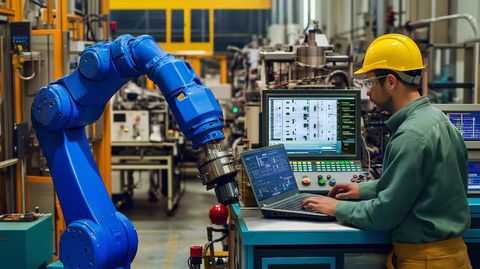
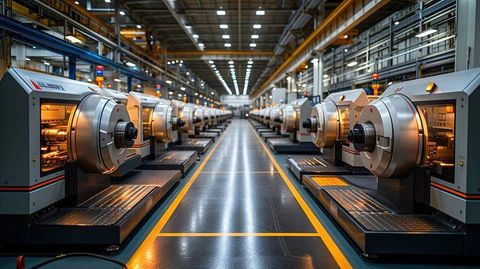
Automation is another important development. A hydraulic press can be integrated with programmable logic controllers, sensors, automatic material handling, robotic loading, and digital monitoring systems. Such integration can reduce unnecessary manual movement and make process information easier to track.
Hydraulic Press Applications
| Application | Typical Purpose |
|---|---|
| Metal forming | Shaping and forming components |
| Deep drawing | Producing formed sheet-metal parts |
| Bending | Creating controlled bends |
| Compression molding | Forming composite, rubber, or plastic materials |
| Straightening | Correcting dimensional deformation |
| Assembly | Applying controlled joining force |
| Powder processing | Compacting suitable materials |
| Recycling operations | Compressing selected recyclable materials |
The business value of hydraulic press automation is not simply about speed. Consistent pressure, repeatable positioning, controlled cycles, and process monitoring can also support quality management and production planning.
Recent Developments in Automation and Efficiency
From 2025 into 2026, industrial automation has continued moving toward connected machinery, digital monitoring, and more intelligent control systems. Hydraulic press applications are increasingly discussed alongside sensors, programmable controls, industrial data collection, and predictive maintenance approaches.
One notable standards development is also taking place. In May 2026, work began on a new edition of ISO 16092-1, the general safety standard for presses. The committee draft entered consultation during 2026 and is intended to replace the 2017 edition. This does not mean the new edition is already the applicable published standard; it remains under development.
The hydraulic-specific ISO 16092-3:2017 standard remains confirmed as the current published edition for hydraulic presses. It addresses significant hazards and safety measures for hydraulic presses used for cold metal and related materials.
Several technology trends are particularly relevant:
- Sensor-based monitoring: Pressure, temperature, position, and vibration data can be monitored electronically.
- PLC automation: Programmable controls can coordinate pressing sequences and safety interlocks.
- CNC integration: Computer-controlled positioning can improve repeatability for suitable applications.
- Robotic material handling: Robots can move components into and out of defined work areas.
- Predictive maintenance: Machine data can help identify abnormal operating conditions before a failure occurs.
- Energy management: Modern hydraulic systems can be designed around more efficient pumps, variable control, and optimized operating cycles.
Efficiency should not be measured only by production speed. Hydraulic system pressure, idle time, leakage, pump operation, tooling condition, and unnecessary machine movement can all influence overall energy performance.
Safety Requirements and Workplace Policies
Hydraulic presses involve significant stored energy and powerful moving components. The point of operation is a major hazard area because hands or other body parts can be caught between tooling during a cycle. OSHA guidance identifies barriers, two-hand controls, electronic safety devices, and suitable hand tools as possible safeguarding measures depending on the machine and operation.
Emergency stop controls, guarded controls, appropriate machine enclosures, and safe access arrangements are also important. Foot controls require particular attention because they do not automatically keep an operator's hands away from the point of operation.
For international applications, ISO 16092-3:2017 provides specific safety requirements for hydraulic presses, while ISO 16092-1 provides general requirements for presses. The standards consider machine design, foreseeable misuse, tooling areas, control systems, maintenance, and other hazards.
Hydraulic Press Safety Checklist
A practical safety program should consider:
- Point-of-operation guarding
- Emergency stop accessibility
- Hydraulic pressure limits
- Safe tooling installation
- Electrical and hydraulic inspections
- Control-system testing
- Preventive maintenance
- Lockout and isolation procedures
- Operator training
- Clear work areas
- Regular inspection records
In India, factory safety requirements are governed through national legislation together with rules implemented by individual states and Union Territories. The Ministry of Labour and Employment identifies the Factories Act, 1948 as a principal framework for factory safety, health, and welfare, with state authorities responsible for implementing relevant rules.
The Factories Act also contains provisions concerning pressure plants and machinery operated above atmospheric pressure, including requirements relating to safe working pressure and possible examination or testing rules.
Because requirements can differ according to location, machine type, workplace, and applicable legislation, organizations should verify the rules that apply to their particular facility.
Tools and Resources for Hydraulic Press Planning
Several general tools can help with hydraulic press analysis and machine management.
Hydraulic pressure calculators can help users understand the relationship between pressure, piston area, and theoretical force.
Force and tonnage calculators can support preliminary process calculations when selecting an appropriate machine capacity.
PLC programming tools are used to develop automated sequences, interlocks, alarms, and machine-control logic.
Maintenance checklists can track inspections of hydraulic oil, hoses, valves, cylinders, seals, electrical controls, guards, and emergency devices.
Energy monitoring tools can help identify operating patterns, idle periods, and unusual energy consumption.
Risk-assessment templates can document hazards around the point of operation, tooling, material handling, maintenance, and automated equipment.
For technical work, calculations should be checked against the machine manufacturer's specifications, engineering requirements, applicable standards, and workplace safety rules. A calculator should support engineering decisions rather than replace them.
Frequently Asked Questions
What is a hydraulic press machine?
A hydraulic press is a machine that uses pressurized hydraulic fluid to generate controlled force through a cylinder and ram. It is commonly used for forming, bending, compression, drawing, straightening, and related industrial processes.
How does hydraulic press automation work?
Automation normally combines sensors, programmable controllers, valves, position monitoring, and material-handling equipment. These components can coordinate machine cycles and monitor selected operating conditions.
Are hydraulic presses safe to operate?
Hydraulic presses can be operated safely when suitable safeguards, controls, maintenance procedures, training, and risk assessments are applied. The exact safety requirements depend on the machine and its application.
What is ISO 16092-3?
ISO 16092-3:2017 is an international safety standard specifically addressing hydraulic presses. It covers technical safety requirements and measures for relevant hazards associated with hydraulic press design and use. The standard was reviewed and confirmed in 2023.
What should be checked during hydraulic press maintenance?
Important checks can include hydraulic fluid condition, leaks, hoses, seals, pressure controls, cylinders, valves, electrical systems, guarding, emergency controls, tooling, and abnormal noise or vibration. The machine's maintenance instructions should determine the inspection frequency and procedures.
Conclusion
Hydraulic press machines remain important in modern manufacturing because they provide controlled force for a wide range of forming and compression processes. Their role is expanding beyond traditional hydraulic power as automation, sensors, programmable controls, robotics, and industrial monitoring become more common.