Automated Packaging Machines: Advanced Technology and System Integration
Automated packaging machines are industrial systems that prepare, fill, seal, label, wrap, or group products with limited manual intervention. They are used in industries such as food processing, pharmaceuticals, cosmetics, electronics, chemicals, and consumer goods manufacturing.
packaging often relies on workers to perform repetitive activities. Automated systems use mechanical equipment, electronic controls, sensors, and software to complete these tasks in a consistent sequence. Depending on the application, a machine may handle one packaging stage or connect several stages into a complete production line.
For example, a packaging line for bottled products may include bottle positioning, liquid filling, cap placement, label application, date coding, inspection, and carton packing. Each machine performs a defined task while exchanging information with other equipment.
How Packaging Automation Developed
Early packaging machinery focused mainly on mechanical operations, such as filling containers and folding cartons. As manufacturing technology advanced, electrical controls and programmable logic controllers (PLCs) made it easier to coordinate multiple operations.
Modern packaging automation can combine:
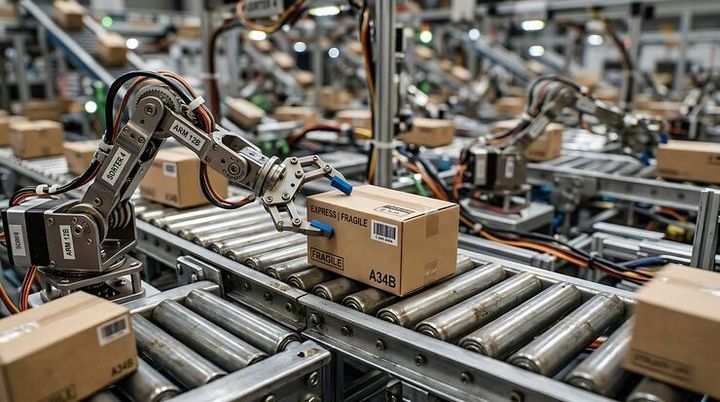
Robotics: Handles products, cartons, trays, and other materials.
Sensors: Detect product positions, container levels, missing labels, and packaging defects.
Machine vision: Examines product appearance, label placement, and package quality.
Programmable controls: Coordinate machine movements and operating sequences.
Industrial software: Records production information and helps operators monitor performance.
Conveyor systems: Move products between processing and packaging stages.
These technologies allow manufacturers to design packaging systems around product characteristics, production volumes, hygiene requirements, and available factory space.
Common Types of Automated Packaging Equipment
Different packaging applications require different machines. The main categories include:
Machine type | Primary function | Typical applications |
|---|---|---|
Filling machines | Dispense measured quantities into containers | Food, beverages, cosmetics |
Sealing machines | Close packages and protect contents | Pouches, trays, bottles |
Labeling machines | Apply labels and product information | Consumer goods, pharmaceuticals |
Cartoning machines | Place products into cartons | Healthcare, electronics |
Wrapping machines | Cover or group products | Pallets, boxes, retail packs |
Palletizing robots | Arrange packages on pallets | Warehousing, manufacturing |
Inspection systems | Detect packaging and product defects | Food, medical products, electronics |
Selecting the appropriate equipment depends on the product, packaging material, required output, changeover frequency, and quality standards.
Why Automated Packaging Technology Matters Today
Improving Production Consistency
Packaging quality affects product protection, storage, transportation, and customer confidence. Manual processes can vary because of fatigue, inconsistent handling, or differences in working methods.
Automated packaging machines follow programmed instructions and use sensors to monitor important operating conditions. This can improve repeatability when the equipment is correctly configured and maintained.
Examples include:
Filling containers to defined target quantities.
Applying labels in consistent positions.
Checking that caps, seals, or closures are present.
Identifying damaged or incorrectly formed packages.
Recording production data for quality reviews.
Automation does not eliminate every defect. Incorrect settings, worn components, unsuitable packaging materials, and sensor errors can still affect results. Regular inspection and calibration remain essential.
Supporting Manufacturing Productivity
Packaging is often one of the final stages of a manufacturing process. If packaging equipment cannot keep pace with upstream production, finished products may accumulate and delay the entire operation.
Integrated systems help coordinate product movement, machine speed, and production schedules. Automated conveyors can transfer products between stations, while control systems can pause or adjust operations when downstream equipment becomes unavailable.
Manufacturers commonly evaluate productivity through measures such as:
Units packaged per minute or hour.
Equipment downtime.
Packaging material waste.
Rejected packages.
Changeover duration.
Overall equipment effectiveness (OEE).
OEE combines equipment availability, operating performance, and quality into one measurement. It helps teams understand whether production losses arise from stoppages, reduced speed, or defective output.
Improving Worker Safety and Ergonomics
Packaging operations can involve repetitive movements, lifting, sharp materials, hot sealing surfaces, and moving machinery. Automation can reduce the need for workers to perform certain repetitive or physically demanding tasks.
Robotic palletizing, automatic carton handling, and powered conveyors can reduce some manual handling requirements. However, automated equipment introduces hazards such as moving robot arms, pinch points, and unexpected machine startup.
Effective safety measures include protective guards, interlocked access doors, emergency stops, safe operating procedures, and appropriate training. Automation should be designed to manage risks rather than assumed to remove them.
Reducing Material Waste and Improving Traceability
Accurate filling, controlled sealing, and automated inspection can help identify packaging problems before products leave the factory. Digital records can also connect production batches with packaging dates, material lots, and inspection results.
This information supports quality investigations and helps manufacturers determine where a problem occurred. Traceability is especially important for regulated products, including medicines, medical devices, and certain food categories.
Recent Developments in Automated Packaging Machines
Artificial Intelligence and Smart Inspection
During 2025 and 2026, artificial intelligence (AI), machine vision, and connected production equipment continued to attract attention across the packaging industry. These technologies help manufacturers analyze machine data, identify visible defects, and recognize patterns associated with equipment performance. Industry reporting published in February 2026 also highlighted AI adoption, operator training, and machine performance as important development areas.
AI should be treated as a support tool rather than a guarantee of defect-free packaging. Its effectiveness depends on training data, camera quality, product variation, and the conditions in which the system operates.
Flexible Robotics and Faster Changeovers
Manufacturers increasingly need equipment that can handle different product sizes, package formats, and production batches. In September 2026, industry reporting highlighted flexible automation, integrated end-of-line systems, and robotic palletizing as notable packaging machinery trends.
Modern packaging lines may use robotic arms to arrange products, collaborative robots for selected handling tasks, and autonomous mobile robots to transport materials between work areas.
Flexible equipment can support changing production requirements, but the appropriate design depends on product weight, machine speed, available space, and safety considerations.
Sustainability and Packaging Material Reduction
Environmental considerations are influencing packaging machinery design. Manufacturers are assessing recyclable materials, lighter packaging formats, accurate material feeding, and equipment that can work with different packaging substrates.
On 12 August 2026, the European Union's Packaging and Packaging Waste Regulation began applying. It establishes requirements relating to packaging design, composition, and waste reduction, with additional obligations scheduled for later dates.
This development makes it important for manufacturers supplying European markets to assess packaging materials and production processes against the rules applicable to their products.
Digital Monitoring and Predictive Maintenance
Connected packaging systems can collect information about operating speed, temperature, vibration, machine stops, and component performance. Maintenance teams can use these records to identify recurring problems and plan inspections.
Predictive maintenance uses data analysis to estimate when equipment may need attention. Its usefulness depends on reliable sensors, appropriate analysis, and accurate maintenance records. It complements rather than replaces routine inspection.
Laws, Regulations, and Safety Policies
Packaging and Environmental Requirements
Automated packaging machines must operate within the legal requirements of the country where they are installed and the markets where packaged products are distributed. Rules may cover machinery safety, packaging materials, labeling, food contact, environmental protection, and product traceability.
In the European Union, Regulation (EU) 2025/40 on packaging and packaging waste entered into force on 11 February 2025 and began applying on 12 August 2026. Some requirements have separate implementation timelines. Manufacturers should check which provisions apply to their packaging, materials, and market activities.
Machinery and Workplace Safety
Industrial packaging equipment may be subject to machinery safety legislation, electrical safety requirements, and workplace risk-control rules. Requirements vary by jurisdiction and equipment type.
Important safety considerations include:
Guarding around moving parts and robotic work areas.
Emergency-stop devices and suitable access controls.
Safe isolation of electrical, pneumatic, and hydraulic energy during maintenance.
Clear operating instructions and staff training.
Risk assessments before installation or modification.
Appropriate inspection and maintenance records.
In the United States, workplace machinery requirements may include Occupational Safety and Health Administration (OSHA) standards. In India, applicable factory, occupational safety, electrical, and product-specific requirements should be checked with the relevant authorities. Requirements can differ according to the facility, product, and legal framework in force.
Food and Pharmaceutical Packaging Rules
Food packaging may need to comply with hygiene requirements and regulations governing materials that contact food. Pharmaceutical packaging may require additional controls for batch identification, label accuracy, tamper evidence, and traceability.
Manufacturers should verify the applicable rules before selecting equipment. For regulated products, packaging records and validated inspection procedures may be as important as production speed.
Tools and Resources for Packaging System Integration
Production Planning and Equipment Selection
Before choosing automated packaging equipment, manufacturers should document product dimensions, packaging materials, expected production volumes, changeover needs, and quality requirements.
Useful planning resources include:
Packaging line assessment templates: Map each packaging stage and identify bottlenecks.
Production capacity calculators: Estimate required output per minute or hour.
Material usage spreadsheets: Track packaging consumption and rejected materials.
Maintenance checklists: Schedule inspections, cleaning, lubrication, and component replacement.
Risk assessment worksheets: Record hazards and the controls needed to reduce them.
Control Systems and Digital Monitoring
PLCs, human-machine interfaces (HMIs), supervisory control and data acquisition (SCADA) systems, and manufacturing execution systems (MES) can help coordinate production activities.
Their roles differ:
Technology | Main purpose |
|---|---|
PLC | Controls machine sequences and equipment movements |
HMI | Allows operators to view status and adjust permitted settings |
SCADA | Monitors and supervises industrial processes |
MES | Tracks production activities, batches, and operational records |
Machine vision | Inspects products and packaging using image analysis |
Maintenance software | Organizes inspections, faults, and maintenance history |
System integration should define how equipment exchanges information, what happens when communication fails, and who can change machine settings. Network security, user permissions, backups, and software version control are also important.
Training and Technical Documentation
Operators and maintenance personnel need clear instructions for startup, shutdown, cleaning, changeovers, fault recovery, and emergency procedures. Training should cover both normal operation and abnormal conditions.
Useful learning materials include industrial automation textbooks, packaging engineering guides, workplace safety documentation, machinery manuals, and relevant government regulatory guidance. Resources should be selected according to the equipment and the rules applicable to the facility.
Frequently Asked Questions
What are automated packaging machines used for?
Automated packaging machines fill, seal, label, wrap, inspect, and arrange products with limited manual intervention. They are used in food processing, pharmaceuticals, cosmetics, electronics, and many other manufacturing industries.
How does system integration improve packaging operations?
System integration connects machines, sensors, conveyors, and production software so they can coordinate their activities. It helps improve production visibility, manage material movement, and identify delays between packaging stages.
What role does AI play in packaging automation?
AI can support visual inspection, production data analysis, fault detection, and maintenance planning. Its performance depends on data quality, suitable equipment, and proper system configuration. Human oversight remains important.
What safety measures are required for automated packaging machines?
Safety measures may include machine guards, interlocked doors, emergency stops, energy isolation procedures, risk assessments, and operator training. The precise requirements depend on local regulations and the machine's design.
How can manufacturers choose the right packaging automation system?
Manufacturers should assess product characteristics, packaging materials, required output, quality standards, available floor space, future production changes, and integration needs. They should also consider maintenance requirements, worker safety, and applicable regulations before finalizing a system.
Conclusion
Automated packaging machines are an important part of modern manufacturing. By combining mechanical equipment, robotics, sensors, control systems, and digital monitoring, they help coordinate packaging activities and maintain consistent production processes.