Humanoid Robotics in Manufacturing: Processes, Benefits, and Challenges
Humanoid robotics is an area of robotics focused on machines designed with a body structure that resembles the human form. These robots may have a head-like sensor unit, a torso, two arms, hands, and two legs. Some models use wheels or fixed platforms instead of legs, depending on their intended tasks.
In manufacturing, humanoid robots are being developed to work in environments originally designed for people. They can potentially handle objects, move materials, operate selected tools, and perform repetitive physical activities. Their usefulness depends on their movement capabilities, sensors, software, and ability to interact safely with their surroundings.
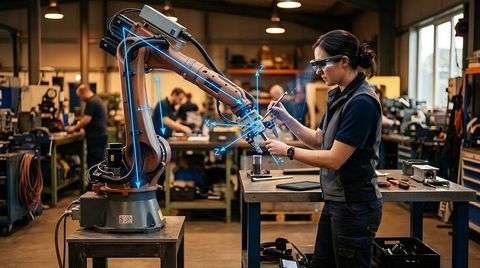
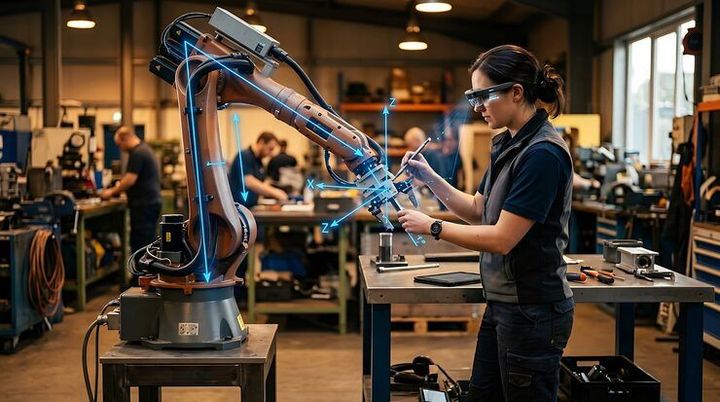
Traditional industrial robots usually perform specific tasks along fixed paths. Robotic arms, for example, are widely used in welding, painting, assembly, and material handling. Humanoid robots take a different approach by combining mobility, object manipulation, and environmental awareness in a single machine.
The idea exists because many factories already contain workstations, shelves, doors, tools, and equipment designed around human movement. A humanoid robot may be able to use parts of this existing infrastructure without requiring every workstation to be redesigned. However, compatibility is not automatic, and many tasks still require special adaptations.
How Humanoid Robots Work
Humanoid robots combine several technologies to understand their environment and perform physical actions.
Sensors: Cameras, depth sensors, force sensors, and other devices help detect objects and obstacles.
Artificial intelligence: AI models help interpret visual information, recognize objects, and select appropriate actions.
Motion control: Control systems coordinate the robot's joints, balance, and movements.
Robotic hands: Multi-fingered hands or specialized grippers help handle tools and materials.
Navigation systems: Mapping and localization technologies help mobile robots move through suitable work areas.
Communication systems: Industrial networks connect robots with monitoring software and selected factory systems.
These components must work together. A robot may recognize a component correctly but still struggle to grasp it if the object is slippery, flexible, unusually shaped, or positioned unpredictably.
Importance: Why Humanoid Robotics Matters Today
Manufacturers face several operational challenges, including repetitive manual activities, changing production requirements, workplace safety concerns, and shortages of workers with particular physical capabilities. Humanoid robotics is being explored as one possible way to address some of these issues.
Its potential importance comes from its ability to combine movement and manipulation in environments that may be difficult to automate with conventional equipment.
Supporting Industrial Productivity
Humanoid robots may assist with repetitive tasks such as moving containers, transferring components, loading selected workstations, and organizing materials. When a task is suitable and the robot operates reliably, automation can help create more consistent production routines.
Performance depends on cycle time, accuracy, uptime, maintenance requirements, and how often people need to intervene. A humanoid robot does not automatically outperform a conventional robotic arm or a dedicated material-handling system.
Improving Workplace Safety
Some industrial activities involve awkward postures, repeated lifting, exposure to hazardous areas, or difficult working conditions. Robots may help reduce human exposure to particular risks when the task can be automated safely.
However, humanoid robots introduce their own hazards. Their moving joints, gripping mechanisms, batteries, and unpredictable responses can create risks if systems are poorly designed or supervised. Risk assessment and appropriate safeguards remain essential.
Supporting Flexible Production
Factories sometimes change products, components, and production layouts. A robot capable of using different tools and handling multiple objects may support certain changes without requiring a completely new automation system.
This flexibility depends on software configuration, task training, hardware compatibility, and reliable performance across different conditions. Highly specialized machinery may remain the better option for high-speed, repetitive operations.
Applications of Humanoid Robots in Manufacturing
| Manufacturing application | Potential role | Main consideration |
|---|---|---|
| Material handling | Moving containers and components | Payload and gripping reliability |
| Assembly support | Positioning selected parts | Precision and task complexity |
| Machine tending | Loading or unloading equipment | Machine compatibility and safety |
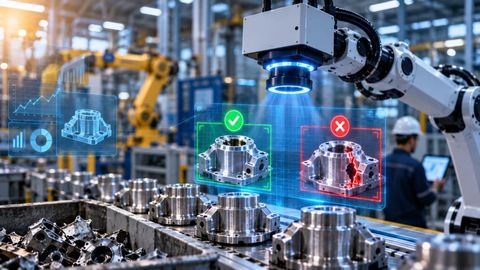
| Inspection | Capturing images and checking visible conditions | Sensor accuracy and inspection standards |
| Warehouse operations | Moving items between work areas | Navigation and traffic management |
| Internal logistics | Transporting tools and materials | Battery life and route planning |
| Maintenance assistance | Reaching selected inspection points | Access, training, and hazard controls |
These applications represent possible uses rather than a guarantee that every humanoid robot can perform each task. Industrial trials are needed to determine whether a particular system meets production requirements.
Benefits and Limitations Compared
| Area | Potential benefit | Important limitation |
|---|---|---|
| Flexibility | Supports selected tasks across workstations | Requires task-specific configuration |
| Mobility | Can move between suitable locations | Uneven floors and obstacles can affect movement |
| Human-oriented design | May interact with existing workspaces | Tools and controls may need adaptation |
| Repetitive work | Can repeat programmed activities | Errors may occur under changing conditions |
| Data collection | Can record operational information | Data quality and integration need attention |
| Workforce support | May reduce selected physical demands | Human supervision and technical skills remain necessary |
Recent Updates and Emerging Trends
Developments During 2025 and 2026
Humanoid robotics has attracted growing attention in industrial automation, particularly through research into AI-based movement, object manipulation, and the use of robots in real manufacturing environments.
During 2025, manufacturers and robotics developers continued exploring pilot deployments, simulation-based training, and systems that combine visual perception with motion planning. These approaches aim to help robots respond to variations in object position and workplace conditions rather than relying entirely on fixed movement sequences.
By 2026, important areas of development include:
AI-based task learning: Systems are being developed to translate demonstrations and task instructions into robot actions.
Simulation and digital twins: Virtual factory environments help teams test movements and workflows before physical deployment.
Improved robotic hands: Research focuses on grasping varied objects and adjusting grip force.
Human-robot collaboration: Development increasingly considers how robots can operate around people under controlled safety conditions.
Fleet coordination: Connected systems can help monitor multiple robots and coordinate selected tasks.
Performance monitoring: Manufacturers are evaluating reliability, downtime, energy consumption, and task completion rates.
These trends describe broad research and development directions, not proof that all technologies are commercially mature. Capabilities vary significantly by robot model and application. Specific deployment figures and performance claims should be checked against dated, independently verifiable evidence.
The Role of AI and Simulation
AI helps robots interpret their surroundings and adapt actions to different objects or situations. Simulation enables engineers to test grasping, balance, navigation, and task sequences in virtual environments.
Nevertheless, successful simulation does not guarantee reliable physical performance. Real factories introduce friction, lighting changes, vibration, unexpected obstacles, and equipment variations that may not be represented accurately in a virtual model.
A careful testing process should therefore include simulation, controlled laboratory trials, supervised factory pilots, and ongoing performance evaluation.
Laws and Policies Affecting Humanoid Robotics
Industrial Machinery Safety
Humanoid robots used in factories must be assessed according to the hazards created by their intended tasks and operating environment. Relevant requirements can cover mechanical movement, electrical systems, emergency stopping, guarding, maintenance, and interactions between people and machines.
International machinery and robot-safety standards provide frameworks for evaluating these risks. Applicable requirements depend on the country, industry, equipment classification, and whether the robot operates independently or alongside workers.
India: Workplace and Industrial Requirements
In India, manufacturers introducing humanoid robots should examine applicable occupational safety requirements, factory regulations, electrical safety provisions, and machinery-related obligations. The Occupational Safety, Health and Working Conditions Code, 2020, is an important part of India's workplace safety framework; its applicable provisions and implementation status should be confirmed for the relevant date and jurisdiction.
Factories must also consider applicable state rules, electrical installation requirements, fire safety measures, and procedures for safe maintenance. Automation does not remove an employer's responsibility to assess and control workplace hazards.
International Safety Standards
Several established standards may be relevant to industrial robotics and machinery risk assessment:
ISO 10218: Addresses safety requirements for industrial robots and robotic applications.
ISO 12100: Provides principles for machinery risk assessment and risk reduction.
ISO/TS 15066: Provides additional guidance for collaborative industrial robot applications.
IEC 60204-1: Covers electrical equipment of machinery.
The applicability of a particular standard depends on the robot's design, intended use, and the governing legal framework. Standards may be adopted or referenced differently across jurisdictions.
AI, Data, and Cybersecurity
Humanoid robots can collect video, sensor readings, operational logs, and information about production activities. Manufacturers should establish appropriate rules for data access, storage, retention, and cybersecurity.
Where applicable, privacy laws and AI-related regulations may govern how personal data is collected and processed. Network-connected robots should also use appropriate access controls, software updates, network protection, and incident-response procedures.
Tools and Resources for Industrial Robotics
Planning and Evaluation Tools
Manufacturers can use several categories of tools to assess humanoid robotics before introducing it into production.
Robot simulation software: Tests movements, reach, collision risks, and task sequences in virtual environments.
Digital twin platforms: Model production lines and evaluate how robots interact with existing equipment.
Computer vision tools: Support object recognition, position estimation, and visual inspection.
Motion-planning systems: Help calculate suitable robot movements around obstacles.
Risk assessment templates: Record hazards, possible consequences, safeguards, and remaining risks.
Maintenance dashboards: Track operating hours, faults, battery condition, and component performance.
Energy monitoring tools: Measure electricity consumption during different operating conditions.
Training resources: Explain robot programming, industrial safety, AI fundamentals, and system integration.
Key Performance Indicators
A factory should measure practical results instead of relying only on demonstrations or advertised capabilities.
| Indicator | What it measures |
|---|---|
| Task success rate | Percentage of attempts completed correctly |
| Cycle time | Time required to complete one task |
| System uptime | Time the robot is available for operation |
| Intervention frequency | How often human assistance is needed |
| Energy consumption | Electricity used during operation |
| Safety incidents | Recorded incidents and near misses |
| Maintenance frequency | How often servicing or repairs are required |
Testing should use consistent measurement methods and include realistic production conditions. Results from a short demonstration may differ from performance over an entire shift.
Frequently Asked Questions
What is humanoid robotics in manufacturing?
Humanoid robotics in manufacturing involves using human-shaped robots to perform or support industrial activities. Depending on their capabilities, these robots may handle materials, move between work areas, assist with selected assembly tasks, or inspect components.
How are humanoid robots different from traditional industrial robots?
Traditional industrial robots are often designed for specific tasks, such as welding or high-speed pick-and-place operations. Humanoid robots combine a more human-like body structure with mobility and manipulation capabilities. The best choice depends on task complexity, speed, accuracy, safety, and operating conditions.
Can humanoid robots work safely alongside people?
They may be able to operate near people when the system is specifically designed, assessed, and safeguarded for that environment. Safe operation requires suitable risk assessment, protective measures, monitoring, training, and maintenance. Human-like appearance alone does not make a robot safe.
What are the main challenges of industrial humanoid robots?
Major challenges include reliable balance, precise manipulation, battery endurance, operating speed, maintenance, integration with factory systems, and safe interaction with people. Manufacturers must also evaluate whether a robot can complete tasks consistently under real production conditions.
What skills are useful for working with humanoid robotics?
Useful skills include robotics fundamentals, mechanical and electrical engineering, programming, AI, computer vision, industrial automation, cybersecurity, and machinery safety. The skills required depend on whether a person works in system design, deployment, maintenance, operations, or safety assessment.
Conclusion
Humanoid robotics is an evolving area of industrial automation that aims to combine mobility, perception, and object manipulation in a human-oriented form. It may help manufacturers automate selected physical tasks, support flexible production, and reduce exposure to certain workplace hazards.