Understanding Semiconductors and Electronic Chips: A User-Friendly Overview
Semiconductors and electronic chips are at the heart of nearly every modern digital device. They exist because today’s technology requires incredibly small, fast, and energy-efficient components that can process information at high speeds. These materials, mainly silicon-based, have a unique ability to conduct electricity partially—making them ideal for controlling electrical signals.
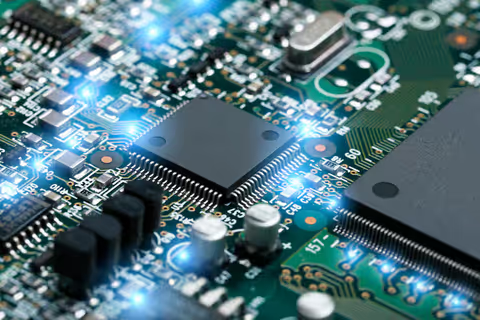
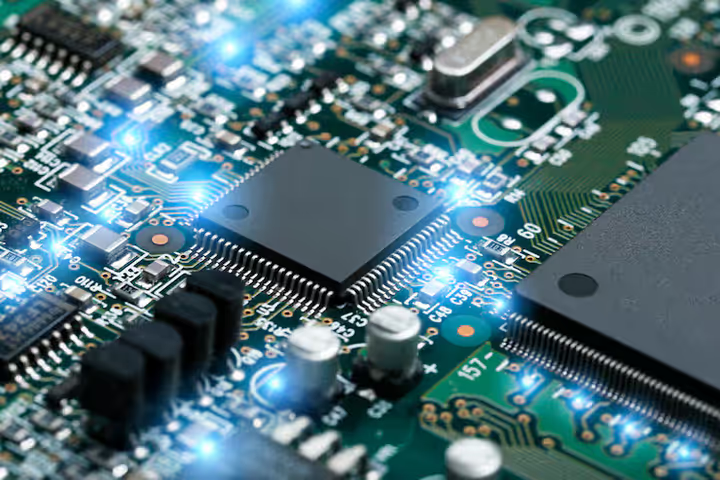
Electronic chips, also known as integrated circuits, are built using semiconductor materials through a precise manufacturing process. They power essential devices such as smartphones, medical equipment, renewable energy systems, automobiles, data centers, advanced sensors, and industrial automation platforms.
The rise of digital transformation, AI computing, smart infrastructure, and connected devices has significantly expanded the role of semiconductors. As equipment becomes smarter and more automated, the need for advanced chip technologies continues to grow in every major sector.
Importance
Semiconductors and chips hold major importance because they affect every industry and support global technology infrastructure. They matter today because:
-
They power high-performance computing, cloud servers, and advanced analytics.
-
They support innovation in wireless communication, including 5G and emerging 6G research.
-
They enable advanced automotive systems like assisted driving, vehicle sensors, and battery-management systems.
-
They help improve energy efficiency in modern homes, factories, and smart devices.
-
They make critical systems—like healthcare diagnostics, aviation controls, and defense technologies—more reliable.
For individuals, semiconductors contribute to daily tasks such as using social platforms, storing photos, or streaming digital content. For organizations, they enable secure data processing, high-speed networks, and optimized workflows. They also solve problems related to speed, miniaturization, and performance by allowing more processing power in smaller physical space.
Below is a simplified view of where semiconductors have the biggest impact:
| Sector | Application |
|---|---|
| Automotive | EV battery systems, safety sensors, driver-assist technologies |
| Communication | Smartphones, IoT devices, high-speed network equipment |
| Healthcare | Diagnostic devices, imaging systems, wearable health trackers |
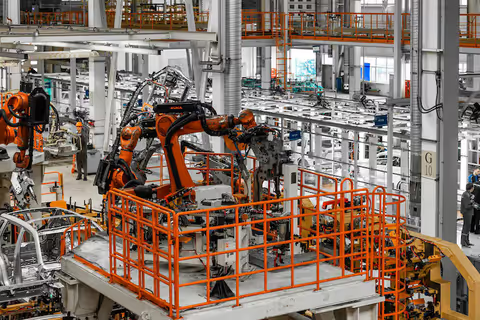
| Industry | Robotics, automation units, predictive-maintenance hardware |
| Energy | Solar inverters, smart-grid controllers, battery-storage units |
Recent Updates
The semiconductor industry has seen major developments over the past year, influenced by rapid advancements in AI and global manufacturing strategies.
2024–2025 Key Trends and Updates
-
AI-Optimized Chips (Early 2024): Chipmakers accelerated production of specialized processors designed for AI training and inference, improving performance for data centers and edge-computing devices.
-
Chip Manufacturing Expansion (Mid-2024): Multiple countries began investing heavily in domestic fabrication plants to reduce dependency on global supply chains.
-
Advances in 3-Nanometer Technology (Late 2024): New design nodes allowed higher efficiency and faster performance, supporting next-generation devices such as high-end smartphones and advanced computing systems.
-
Growth in Automotive Semiconductors (2025): With EV adoption rising, more manufacturers transitioned to chips optimized for battery management and safety features.
-
Focus on Supply Chain Resilience (2025): Manufacturers adopted new strategies for material sourcing, logistics, and risk mitigation to avoid chip shortages similar to 2020–2022.
These changes highlight a shift toward more powerful, efficient, and locally manufactured chip technologies across major markets.
Laws or Policies
Semiconductors and chip manufacturing are affected by national and international regulations that influence production, research, and global trade. Many countries use policy frameworks to strengthen their technology ecosystems.
Common Areas of Regulation
-
Manufacturing Incentives: Some governments offer grants or tax benefits to encourage local chip production.
-
Research and Innovation Programs: Funding initiatives support advancements in AI hardware, nano-electronics, and materials research.
-
Export-Control Rules: Countries may restrict the export of certain chip technologies for national-security reasons.
-
Environmental Standards: Semiconductor plants must follow strict regulations for water usage, chemical handling, and waste treatment.
-
Cybersecurity Requirements: Chips used in critical infrastructure must meet safety and security guidelines to protect sensitive systems.
These policies shape how semiconductor companies operate, collaborate, innovate, and expand production capabilities.
Tools and Resources
Several helpful tools, platforms, and resources can support deeper understanding of semiconductor technologies and electronic chips. These options include:
-
Online Circuit Simulators – Useful for experimenting with digital and analog components.
-
Semiconductor Property Databases – Provide technical information about materials, conductivity behavior, and structural properties.
-
Chip Design Software – Platforms for creating logic circuits and analyzing performance.
-
Learning Resources – Educational portals offering tutorials on microelectronics, nano-fabrication, and basic chip architecture.
-
Technology Research Reports – Provide insights into trends in chip design, material science, and manufacturing progress.
Below is a simple comparison table of common resource types:
| Resource Type | Purpose |
|---|---|
| Simulators | Practice circuit behavior and design logic flow |
| Databases | Check semiconductor material characteristics |
| Design Tools | Create and analyze integrated circuits |
| Educational Portals | Learn fundamentals and modern advancements |
| Industry Reports | Track global updates and technology trends |
These tools make it easier for students, researchers, and beginners to explore how chips function in real-world applications.
FAQs
What is a semiconductor?
A semiconductor is a material that conducts electricity under certain conditions. It is used to create components like diodes, transistors, and integrated circuits.
How do electronic chips work?
Electronic chips process electrical signals through interconnected transistors. These transistors act as switches that turn on or off to perform tasks such as computing, storing data, or controlling devices.
Why are semiconductors essential for AI and advanced computing?
AI requires high-speed data processing and parallel computing. Semiconductor innovations enable faster processors, lower energy usage, and more efficient data handling.
Which industries rely the most on chips today?
Automotive systems, healthcare technologies, mobile devices, cloud computing services, industrial automation, telecommunications networks, and renewable energy platforms rely heavily on chips.
Are semiconductor shortages still a concern?
While conditions have improved, supply chain stability remains a focus. Many countries expanded production capacity in 2024–2025 to prevent future disruptions.
Conclusion
Semiconductors and electronic chips form the foundation of modern digital life. Their unique properties allow them to power essential technologies, support advanced computing, and enable innovations across global industries. With continuous advancements in AI-optimized processors, manufacturing capabilities, and research programs, the semiconductor ecosystem is evolving faster than ever.
As technologies grow more interconnected, the importance of these components will only increase. Understanding how semiconductors work, how they influence daily activities, and how regulations shape the industry helps individuals and organizations appreciate the role of chips in shaping a smarter and more efficient world.