PVC Pipe Manufacturing: Explore Automation and Smart Technology
PVC pipe manufacturing is the industrial process used to produce pipes from polyvinyl chloride, commonly known as PVC. These pipes are widely used in water distribution, drainage, irrigation, construction, electrical applications, and other infrastructure projects.
PVC became important in pipe production because it can be formed into different sizes and shapes while providing useful properties such as corrosion resistance, dimensional stability, and relatively low weight. Different formulations and production methods allow manufacturers to produce pipes for different applications.
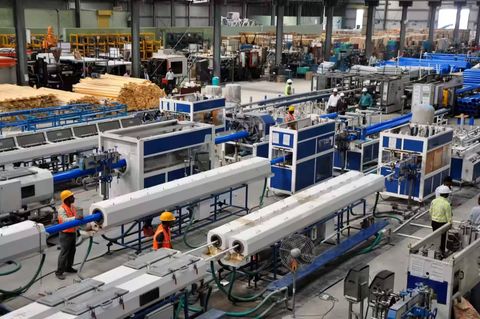
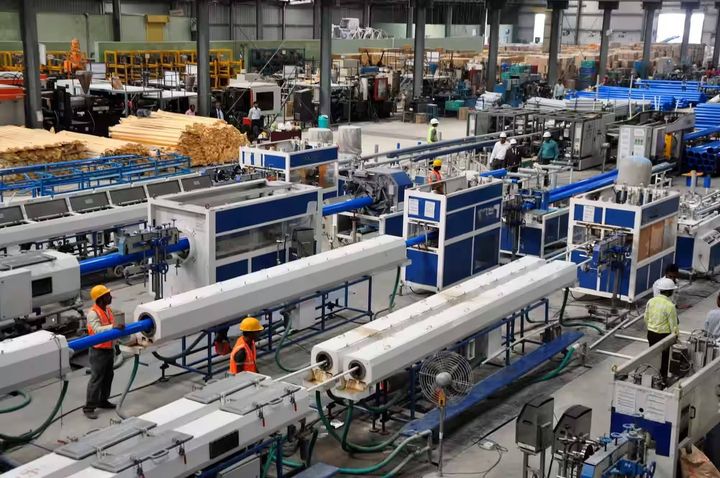
A typical PVC pipe production line involves several connected stages. PVC resin and other permitted formulation ingredients are prepared and mixed before entering an extrusion system. The material is heated and pushed through a die that determines the pipe's basic shape.
After extrusion, the pipe passes through a sizing and cooling system. Cutting equipment then creates the required lengths. Depending on the application, additional equipment may create sockets, grooves, or other end configurations.
Modern production lines increasingly combine mechanical equipment with electronic controls. Sensors can monitor temperature, pressure, dimensions, speed, and other process conditions. Programmable controllers can then coordinate different parts of the production line.
This combination of manufacturing equipment and digital control is helping move PVC pipe manufacturing toward more automated production environments.
Why PVC Pipe Manufacturing Matters Today
PVC pipes are connected to several important infrastructure activities. Water distribution networks, drainage systems, buildings, agricultural irrigation, and underground utilities all require piping systems with appropriate technical characteristics.
The manufacturing process therefore needs consistent control. Small changes in temperature, extrusion speed, cooling, or material preparation can affect pipe dimensions and physical properties.
Automation helps manufacturers monitor these variables more consistently. It can also reduce the amount of repetitive manual adjustment required during normal production.
Important areas affected by modern PVC pipe manufacturing include:
- Water and sanitation infrastructure
- Building drainage systems
- Agricultural irrigation
- Underground drainage
- Electrical conduit applications
- Industrial piping applications
- Construction and infrastructure projects
Smart manufacturing technology can also improve production visibility. Instead of depending only on physical inspection, operators can use digital displays and recorded production data to identify changes in process conditions.
Common Manufacturing Stages
| Production Stage | Main Purpose | Typical Technology |
|---|---|---|
| Material preparation | Prepare PVC formulation | Mixing and dosing equipment |
| Extrusion | Form continuous pipe | Extruder and die |
| Sizing | Maintain dimensions | Vacuum sizing equipment |
| Cooling | Stabilize the pipe | Cooling tanks |
| Haul-off | Control movement | Servo or controlled drives |
| Cutting | Create required lengths | Automatic cutting equipment |
| End processing | Prepare pipe ends | Socketing or grooving equipment |
| Inspection | Check quality | Measuring and testing instruments |
The overall objective is not simply faster production. Consistency, process control, workplace safety, energy management, and product quality are also important considerations.
Automation and Smart Technology Trends
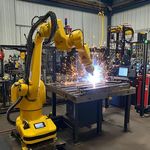
Automation is becoming a major part of modern industrial manufacturing. In PVC pipe production, automation can connect extrusion, cooling, haul-off, cutting, and inspection operations into a coordinated production system.
Programmable logic controllers, or PLCs, are commonly used to control sequences and equipment. Human-machine interfaces, or HMIs, provide operators with information about operating conditions and allow authorized adjustments.
Sensors are another important part of smart manufacturing. Temperature sensors can monitor heating zones, while pressure and speed sensors can provide information about extrusion conditions.
Digital data collection can support production analysis. For example, recorded information can help identify when a process variable changes repeatedly or when equipment performance begins to move outside an expected range.
Smart Technologies Used in PVC Pipe Production
- PLC-based process control
- HMI operator panels
- Temperature and pressure sensors
- Automated dimensional measurement
- Servo-controlled drives
- Digital production records
- Automated cutting systems
- Machine condition monitoring
- Quality inspection equipment
- Industrial data dashboards
Artificial intelligence and machine-learning methods are also being explored across manufacturing for pattern detection and predictive analysis. Their usefulness depends on the quality of available data, system integration, and appropriate human oversight.
Recent Updates and Developments
During 2025 and 2026, manufacturing discussions have continued to focus on connected equipment, data-based process monitoring, energy efficiency, automation, and digital quality control.
For PVC pipe production, these developments are particularly relevant because extrusion is a continuous process. Monitoring process variables throughout production can help operators identify changes earlier than periodic manual checks alone.
Another important development is the growing use of integrated quality systems. Modern production environments can combine dimensional measurements, process information, test results, and production records into a more organized quality workflow.
India's Bureau of Indian Standards continues to maintain and update information connected with plastic piping standards. For example, BIS lists IS 4985:2021 for unplasticized PVC pipes for potable water supplies and IS 13592:2013 for PVC-U pipes used in soil and waste discharge systems.
BIS records also show ongoing laboratory activity related to these standards. New laboratory scopes and testing capabilities have been added during 2025 and 2026, showing continued attention to testing and conformity assessment for PVC piping products.
These developments indicate that digital manufacturing and formal quality verification are becoming increasingly connected parts of modern pipe production.
Laws, Standards, and Policies in India
PVC pipe manufacturing in India is influenced by technical standards, testing requirements, environmental rules, workplace requirements, and application-specific regulations.
The applicable standard depends on the type and intended use of the pipe. For example, BIS identifies IS 4985:2021 for unplasticized PVC pipes intended for potable water supplies. IS 13592:2013 covers PVC-U pipes for soil and waste discharge systems, including ventilation and rainwater applications.
BIS documentation for IS 13592 describes Type A and Type B PVC-U pipes and specifies relevant size ranges and end configurations. Testing and licensing arrangements can depend on the varieties and manufacturing and testing capabilities covered.
Other standards can apply to different PVC piping applications. BIS also lists standards covering PVC-O water pipes and CPVC piping for hot and cold water distribution.
Manufacturers and technical teams should therefore identify the exact application before selecting a standard. The relevant current edition, amendments, testing requirements, and applicable regulatory conditions should be checked through the appropriate Indian authorities.
Environmental and workplace rules may also apply to manufacturing facilities. These can include requirements relating to emissions, waste management, electrical safety, machinery safety, and industrial operations. The exact obligations depend on the facility, location, process, and applicable legislation.
Tools and Resources for PVC Pipe Manufacturing
Several general tools can support learning, production planning, monitoring, and quality management.
Useful Resources
- Extrusion process monitoring dashboards
- PLC programming and diagnostic tools
- HMI configuration software
- Pipe dimension measurement systems
- Temperature and pressure monitoring instruments
- Production data logging templates
- Preventive maintenance schedules
- Quality inspection checklists
- Material calculation worksheets
- Energy monitoring tools
- Engineering calculators
- Technical standards databases
- Laboratory testing resources
- Operator training materials
A basic production dashboard may track extrusion temperature, line speed, pipe diameter, wall thickness, cooling conditions, equipment alarms, and inspection results.
Digital records can also help compare production batches and identify recurring process variations. However, automated measurements should be checked and maintained according to appropriate procedures.
Frequently Asked Questions
What is PVC pipe manufacturing?
PVC pipe manufacturing is the process of converting PVC-based material into pipes through preparation, extrusion, sizing, cooling, cutting, and inspection. Additional processes may be used depending on the pipe design.
How does automation help PVC pipe production?
Automation can coordinate production equipment, monitor process conditions, control operating parameters, record data, and reduce repetitive manual adjustments. It can support consistency when properly configured and maintained.
What is extrusion in PVC pipe manufacturing?
Extrusion is the main forming process in which prepared PVC material passes through an extruder and die to create a continuous pipe shape. The pipe is then sized and cooled before cutting.
Which Indian standard applies to PVC pipes?
The applicable standard depends on the pipe's intended application. For example, BIS lists IS 4985:2021 for unplasticized PVC pipes for potable water supplies and IS 13592:2013 for PVC-U soil and waste discharge systems.
Can smart technology improve quality monitoring?
Digital sensors, automated measurements, production records, and control systems can provide more continuous information about manufacturing conditions. They can support quality monitoring, but appropriate testing and human review remain important.
Conclusion
PVC pipe manufacturing is developing from conventional extrusion-based production toward more connected and automated manufacturing systems. PLC controls, sensors, digital monitoring, automated measurement, and production data can help manufacturers manage complex processes more consistently.