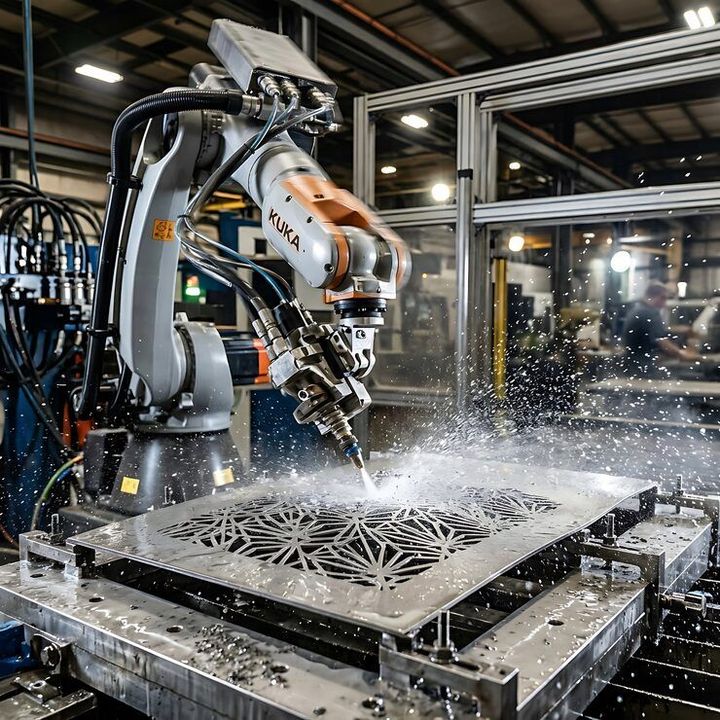
Aluminum Manufacturing Machines: Explore Smart Factory Technology
Aluminum manufacturing machines are industrial systems used to process aluminum into sheets, plates, profiles, tubes, components, and other finished or semi-finished products. These machines support different stages of production, including melting, casting, rolling, extrusion, cutting, forming, machining, and quality inspection.
Aluminum is widely used because it is lightweight, corrosion resistant, recyclable, and suitable for many engineering applications. It appears in transportation, construction, packaging, electronics, renewable energy equipment, and industrial products.
Modern aluminum production increasingly combines traditional machinery with smart factory technology. Sensors, programmable controls, automated material handling, machine monitoring, and production data can help manufacturers understand how equipment is operating and where process improvements may be possible.
A typical aluminum manufacturing operation can include several machine groups:
- Melting and holding furnaces
- Aluminum casting equipment
- Rolling mills
- Extrusion presses
- Cutting and shearing machines
- CNC machining equipment
- Heat-treatment systems
- Surface-finishing equipment
- Inspection and measurement systems
- Automated material-handling equipment
The exact machinery depends on the aluminum product being produced and the required properties, dimensions, and surface quality.
Importance
Aluminum manufacturing machines matter because modern industries need materials that combine low weight with useful mechanical and corrosion-resistant properties. Transportation manufacturers, building-material producers, electrical equipment manufacturers, and many other sectors depend on consistent aluminum products.
Automation can also help address several production challenges. Repetitive processes may be monitored using sensors and programmable control systems. Production data can provide information about temperature, pressure, speed, vibration, energy consumption, and other operating conditions.
Smart manufacturing technology can connect this information with production-management systems. This creates a more detailed picture of how equipment behaves during different stages of production.
How smart technology is changing aluminum production
Smart factory technology generally focuses on collecting and using production information.
Important technologies include:
- Industrial sensors: Monitor temperature, pressure, vibration, speed, and other conditions.
- PLC systems: Control sequences and machine operations.
- Industrial data platforms: Organize information from production equipment.
- Machine vision: Supports automated inspection of dimensions and surface conditions.
- Robotics: Can assist with repetitive handling and production activities.
- Digital monitoring: Helps operators observe equipment conditions.
- Predictive maintenance tools: Analyze equipment data to identify patterns that may require attention.
These technologies do not eliminate the need for trained personnel. Instead, they can provide additional information for operators, engineers, maintenance teams, and production managers.
Major aluminum manufacturing machine categories
| Machine type | Main purpose | Typical application |
|---|---|---|
| Melting furnace | Melts aluminum | Primary and secondary processing |
| Casting machine | Forms molten aluminum | Billets, slabs, and other forms |
| Rolling mill | Reduces material thickness | Sheets and plates |
| Extrusion press | Forms aluminum through a die | Profiles and sections |
| Cutting machine | Produces required dimensions | Sheets, bars, and profiles |
| CNC machine | Performs controlled machining | Precision components |
| Heat-treatment system | Changes material properties | Selected alloys and products |
| Inspection equipment | Checks quality | Dimensions and surface conditions |
Choosing equipment therefore depends on the production process rather than simply selecting the most automated machine available.
Recent Updates
During 2025 and 2026, industrial manufacturers have continued to focus on automation, energy efficiency, digital monitoring, recycling, and data-based production management.
One important trend is the integration of Industrial Internet of Things (IIoT) technology. Connected sensors can collect operational information from machines and make it available through centralized monitoring systems.
Another development is the wider use of machine-learning techniques for industrial data analysis. In suitable applications, historical operating data can help identify unusual patterns in equipment performance.
Energy efficiency is receiving greater attention
Aluminum production can require substantial energy, particularly during melting and primary production. As a result, manufacturers are examining furnace efficiency, process control, heat recovery, renewable electricity, and recycled aluminum feedstock.
Recycling is particularly relevant because remelting aluminum generally requires much less energy than producing primary aluminum from ore. Modern manufacturing systems can therefore include equipment and controls designed to support efficient processing of recycled material.
Automation is becoming more connected
Earlier automation systems often focused on individual machines. Modern smart factory approaches increasingly connect multiple production stages.
For example, information from a rolling machine may be combined with inspection data and production records. This can make it easier to identify relationships between process settings and final product characteristics.
Digital twins and simulation
Digital-twin technology is another area of interest. A digital representation of equipment or a production process can be used to study operating conditions without changing the physical production system immediately.
Simulation tools may help engineers examine production sequences, material flow, machine capacity, and potential process changes.
These technologies are developing rapidly, but their usefulness depends on data quality, system integration, process complexity, and appropriate human oversight.
Laws or Policies
Aluminum manufacturing is affected by several categories of regulation. The exact requirements depend on the country, production activity, facility location, and type of equipment.
Environmental rules can cover areas such as:
- Air emissions
- Industrial waste
- Water use and wastewater
- Hazardous materials
- Energy consumption
- Recycling and waste management
Industrial facilities may also need workplace safety controls for furnaces, moving machinery, high temperatures, electrical systems, pressure equipment, and material handling.
Machine safety frameworks commonly address:
- Emergency stopping systems
- Machine guarding
- Electrical safety
- Operator protection
- Maintenance procedures
- Risk assessment
- Workplace training
Environmental policies are also influencing aluminum manufacturing. Governments in many regions are encouraging lower-emission industrial processes, resource efficiency, and greater use of recycled materials.
For companies operating internationally, product specifications and material standards can also be important. Aluminum alloys may be identified according to recognized technical standards covering composition, mechanical properties, dimensions, and testing requirements.
Because regulations vary by jurisdiction, manufacturers should verify the latest requirements with the appropriate national, regional, or local authority before making compliance decisions.
Tools and Resources
A range of general tools can support aluminum manufacturing planning, monitoring, and learning.
Production planning tools
Production-planning software can help organize machine capacity, production sequences, material requirements, and delivery schedules.
Energy monitoring tools
Energy meters and industrial monitoring systems can track electricity or fuel consumption at different stages of production. Comparing energy data with production output can provide useful efficiency indicators.
Maintenance dashboards
Maintenance dashboards can organize information such as operating hours, inspection dates, vibration readings, temperature measurements, and maintenance history.
Material calculators
Aluminum weight and volume calculators can estimate material mass from dimensions and density. These tools are useful when planning material requirements or comparing different product dimensions.
CAD and simulation tools
Computer-aided design and manufacturing tools can help engineers develop aluminum components, extrusion profiles, fixtures, and machining processes.
Quality-control templates
Digital inspection templates can record:
- Product dimensions
- Surface condition
- Alloy identification
- Temperature readings
- Production batch information
- Inspection results
Standardized records can make it easier to compare production results over time.
Learning resources
Technical standards, government publications, industrial safety guidance, engineering textbooks, and manufacturer documentation can help users understand aluminum processing and machine operation.
FAQs
What machines are commonly used in aluminum manufacturing?
Common equipment includes melting furnaces, casting machines, rolling mills, extrusion presses, cutting equipment, heat-treatment systems, CNC machines, and inspection equipment. The combination depends on the final aluminum product.
What is smart factory technology in aluminum manufacturing?
Smart factory technology connects machinery, sensors, control systems, and production data. It can help operators monitor processes and analyze equipment performance.
Why is automation used in aluminum production?
Automation can improve process consistency, monitor operating conditions, reduce repetitive manual activities, and provide production data. Human supervision and appropriate safety procedures remain important.
How does recycling affect aluminum manufacturing?
Recycling allows aluminum-containing material to be processed into usable feedstock. Because aluminum can be recycled repeatedly, recycling is an important part of resource efficiency and circular manufacturing.
What should manufacturers consider when selecting aluminum machinery?
Important factors include the aluminum alloy, product dimensions, production volume, required tolerances, energy requirements, safety considerations, maintenance needs, automation level, and applicable regulations.
Conclusion
Aluminum manufacturing machines are evolving from individual production systems into connected equipment within increasingly digital factories. Furnaces, casting systems, rolling mills, extrusion presses, machining equipment, inspection systems, and material-handling technologies each have specific roles in the production process.