Smart Guide: Selecting the Ideal Conveyor System for Your Workflow
Conveyor systems play a central role in modern industrial environments where consistent material movement is needed. They exist to simplify the transfer of goods, components, or bulk materials across different stages of a workflow. As operations scale, the need for reliable movement grows, encouraging industries to adopt structured systems that support higher productivity.
Today’s industries increasingly rely on industrial automation solutions and smart manufacturing technologies, which has elevated the importance of selecting the right conveyor system. A suitable design directly influences product handling, workplace efficiency, and operational safety. As workflows become more specialized, the demand for conveyor systems tailored to specific industries continues to rise.
Importance
Selecting the appropriate conveyor system matters because it affects how materials travel through different stages of production or processing. A well-designed conveyor arrangement can reduce manual handling, minimize slowdowns, and support continuous workflow operations. This is particularly important for facilities that rely on precision timing or need to maintain stable throughput without interruptions.
Industries such as logistics, electronics manufacturing, pharmaceuticals, and agriculture use conveyor systems to manage time-sensitive or delicate operations. Proper selection helps prevent product damage, improves accuracy, and supports material handling optimization efforts. When facilities operate with safer, more predictable material movement, worker fatigue decreases and productivity improves.
Conveyor systems also support businesses adapting to evolving standards in sustainability and energy efficiency. Modern systems are engineered to consume less power and integrate with factory optimization systems that track workflow efficiency. This allows companies to analyze trends, detect bottlenecks, and enhance overall process control. As industries adopt more automated workflow strategies, the role of conveyors becomes essential in maintaining consistent performance across multiple operational layers.
Recent Updates
Over the past year, several developments have shaped how industries evaluate and use conveyor systems. Key updates from 2024–2025 include:
Adoption of sensor-based monitoring (2024).
Manufacturing facilities increasingly incorporated smart sensors in conveyors to monitor vibrations, speed variations, and abnormal load conditions. These sensors help in predictive maintenance, reducing downtime and improving operational accuracy.
Energy-efficient conveyor motors introduced (March 2025).
New motor technologies were highlighted in engineering reports early in 2025, focusing on reduced energy usage and higher output efficiency. These were particularly relevant for facilities seeking upgrades aligned with sustainability goals.
Growth of modular conveyor designs (2024–2025).
Industries have shifted toward modular belt and roller systems that can be expanded or reconfigured without replacing entire setups. This approach supports adaptable workflows and minimizes system interruptions during layout changes.
Increased emphasis on hygiene-focused conveyors (late 2024).
Food and pharmaceutical sectors adopted updated hygienic conveyor structures with enhanced wash-down compatibility and microbial-resistant materials, following updated sanitation recommendations published in December 2024.
These updates reflect broader trends in automated workflow design, digital monitoring, and system adaptability, all of which influence how organizations choose appropriate conveyor types.
Laws or Policies
Regulations play a significant role in how conveyor systems are selected and used. Standards vary by country, but several common policies influence system design, installation, and operation.
Occupational Safety Regulations.
Many countries enforce workplace safety standards for machinery, requiring protective guards, emergency stop mechanisms, and safe operating speeds. Conveyor systems must comply with national safety guidelines such as mechanical guarding requirements and emergency-stop positioning.
Environmental and Energy Guidelines.
Governments promoting energy-efficient industrial operations provide guidance on equipment that supports reduced energy consumption. Conveyor systems using optimized motors and power-saving controls often align with these recommendations.
Industry-Specific Compliance.
Food processing facilities must follow hygiene and contamination-prevention policies, encouraging the use of stainless steel frameworks and smooth, washable belt materials. Pharmaceutical manufacturing requires conveyor materials that do not shed particles or disrupt controlled production environments.
Automation and Machinery Standards.
Countries may adopt international codes such as ISO standards for machinery integration, electrical safety, and ergonomic operation. These standards influence conveyor design compatibility with advanced automation and robotics.
Understanding regulations is essential for choosing systems that meet both workflow demands and compliance expectations.
Tools and Resources
Several tools and resources are available to help evaluate, compare, and plan conveyor system selections. These resources support workflow analysis, layout modeling, safety checks, and performance calculations.
Workflow Analysis Tools
-
Online calculators for material flow rate
-
Software for mapping conveyor routing
-
Load distribution modeling tools
-
Belt speed and tension calculators
Design and Simulation Platforms
-
3D layout planning software
-
Conveyor path simulation tools
-
Digital twin modeling for industrial layouts
Industry Information Resources
-
Material handling engineering portals
-
Industrial automation directories
-
Technical documentation from conveyor component manufacturers
-
Standards databases for safety compliance
Optimization and Monitoring Tools
-
Sensor-based vibration monitoring platforms
-
Energy consumption tracking dashboards
-
Workflow bottleneck analysis software
These resources support better planning and ensure that the selected conveyor design aligns with material handling optimization and smart manufacturing technologies.
Comparison Table: Common Conveyor Types
| Conveyor Type | Best For | Features | Workflow Benefit |
|---|---|---|---|
| Belt Conveyor | Packaging, assembly, sorting | Continuous belt, flat or inclined | Smooth transport for varied materials |
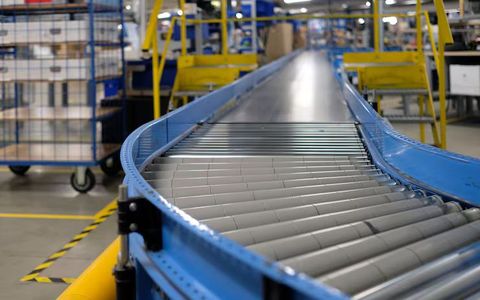
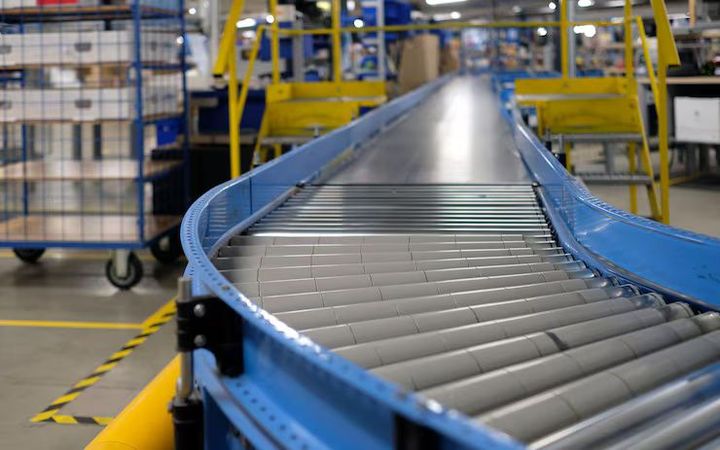
| Roller Conveyor | Warehousing, distribution | Gravity or powered rollers | Efficient for boxes, pallets |
| Chain Conveyor | Heavy-duty manufacturing | Durable chain links | Handles high-load materials |
| Screw Conveyor | Bulk materials | Enclosed rotating screw | Controlled movement of powders or grains |
| Modular Conveyor | Flexible workflows | Interchangeable segments | Easy reconfiguration |
FAQs
What factors should be considered when choosing a conveyor system?
Key factors include material type, load weight, workflow speed, available space, energy requirements, and safety features. These elements determine the system’s compatibility with a specific workflow.
Do conveyor systems require regular maintenance?
Yes. Routine checks for belt alignment, motor condition, lubrication, and sensor performance help maintain stable operation. Predictive monitoring tools can further reduce unexpected downtime.
How do conveyor systems support workflow optimization?
They ensure consistent material movement, reduce manual workloads, support repetitive operations, and help maintain steady production pacing. This improves overall process reliability.
Which industries benefit most from conveyor systems?
Manufacturing, logistics, packaging, agriculture, mining, pharmaceuticals, and food processing all rely heavily on conveyor systems to support continuous operations.
Are smart conveyor systems becoming more common?
Yes. Recent trends show increasing adoption of sensor-enabled conveyors, digital monitoring systems, and modular automation components aligned with industrial automation solutions.
Conclusion
Selecting the ideal conveyor system for a workflow involves understanding the materials being handled, the process requirements, and the operational goals of the facility. With recent advancements in monitoring, energy efficiency, and modular design, conveyor systems continue to evolve toward more adaptable and smarter configurations. Compliance with safety and industry regulations is an essential part of choosing the right system, ensuring safe and stable workflow integration.
Using available tools, calculators, and workflow analysis platforms can guide better decision-making and support long-term operational improvements. As industries move toward greater automation and optimization, conveyor systems remain essential components of efficient and well-structured workflows.