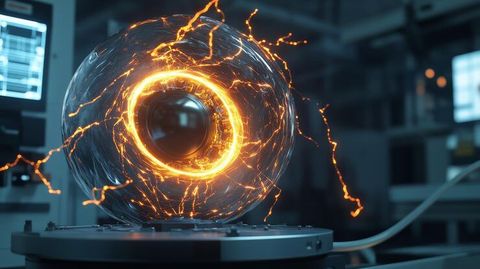
Exploring Quantum Machines: Technology Behind the Future
Quantum machines refer to advanced computing and processing systems that operate using the principles of quantum mechanics rather than classical physics. Unlike traditional computers that use bits (0 or 1), quantum machines use quantum bits, commonly known as qubits, which can exist in multiple states simultaneously through a phenomenon called superposition.
The idea behind quantum machines emerged from the limitations of classical computing. As data volumes grew and computational problems became more complex, scientists began exploring physics-based approaches that could process information more efficiently. Quantum technology was developed to address challenges that classical systems struggle with, such as large-scale simulations, optimization problems, and advanced cryptography.
Today, quantum machines represent a convergence of physics, mathematics, computer science, and engineering. They are not replacements for traditional systems but are designed to complement them in specialized, computation-heavy scenarios.
Importance: Why Quantum Machines Matter Today
Quantum machines are important because they address problems that are either impractical or impossible for classical systems to solve within a reasonable timeframe. As industries become increasingly data-driven, the need for faster and more accurate computation has grown.
Key areas affected by quantum machines include:
-
Scientific research, where complex molecular and material simulations are required
-
Cybersecurity, particularly in encryption analysis and quantum-safe cryptography
-
Finance and logistics, where optimization models involve massive variables
-
Artificial intelligence research, especially in model training and pattern recognition
One of the most significant problems quantum machines aim to solve is computational scalability. Classical processors face physical and energy limitations, while quantum systems explore alternative ways to scale performance. This makes quantum technology highly relevant in an era focused on efficiency, data security, and advanced analytics.
Recent Updates: Developments in the Past Year
Over the past year, quantum machine development has continued to progress steadily.
In March 2025, multiple research institutions reported improvements in qubit stability, extending coherence times and reducing error rates in experimental systems. These advancements are critical for reliable quantum computation.
In July 2025, several technology companies announced mid-scale quantum processors exceeding 1,000 qubits in controlled environments, marking a step forward in hardware scalability. While these machines are still primarily used for research, they demonstrate rapid technological momentum.
Another notable trend in late 2025 has been the growth of hybrid computing models. These systems integrate classical high-performance computing with quantum processors, allowing tasks to be distributed based on computational suitability.
The following table summarizes recent trends:
| Year | Development Area | Key Progress |
|---|---|---|
| 2024 | Qubit design | Improved coherence stability |
| 2025 | Hardware scaling | Systems exceeding 1,000 qubits |
| 2025 | Software frameworks | Growth of quantum algorithms |
| 2025 | Hybrid systems | Classical–quantum integration |
These updates indicate that quantum machines are transitioning from purely theoretical tools toward early-stage practical applications.
Laws and Policies: Regulatory and Government Influence
Quantum technology is increasingly shaped by government policies and international regulations due to its strategic importance.
In the United States, national quantum initiatives continue to support research funding, infrastructure development, and public–private collaboration. These programs emphasize responsible innovation and secure technology development.
Within the European Union, quantum research is aligned with digital sovereignty goals. Regulatory frameworks focus on ethical research, data protection compatibility, and cross-border collaboration among member states.
In India, government-backed quantum missions aim to strengthen domestic research capacity, encourage academic involvement, and support long-term technology readiness. Policy discussions also emphasize cybersecurity resilience in the post-quantum era.
Across regions, regulations generally focus on:
-
Research transparency
-
Security implications of quantum encryption
-
International collaboration guidelines
These policies do not restrict innovation but guide it to ensure safety, fairness, and long-term societal benefit.
Tools and Resources: Learning and Research Support
A growing ecosystem of tools and resources supports the study and development of quantum machines. These platforms are widely used in academic and research environments.
Helpful resources include:
-
Quantum programming frameworks for algorithm development
-
Simulation platforms that model quantum circuits on classical hardware
-
Educational portals offering structured learning paths
-
Research databases for peer-reviewed quantum studies
Example resource categories are shown below:
| Resource Type | Purpose |
|---|---|
| Simulators | Test quantum logic without physical hardware |
| Development kits | Build and analyze quantum algorithms |
| Documentation hubs | Learn quantum computing fundamentals |
| Research archives | Access latest scientific publications |
These tools play a critical role in making quantum technology more accessible to students, researchers, and professionals.
FAQs: Common Questions About Quantum Machines
What makes quantum machines different from traditional computers?
Quantum machines use qubits that can represent multiple states at once, allowing certain calculations to be performed more efficiently than with classical bits.
Are quantum machines used in everyday applications?
Currently, most quantum machines are used in research and experimental settings. Practical applications are emerging gradually in specialized fields.
Do quantum machines replace classical systems?
No. Quantum machines are designed to complement classical systems by handling specific types of complex problems.
Is quantum technology secure?
Quantum technology introduces new security models. While it challenges traditional encryption, it also enables advanced quantum-safe security methods.
How long before quantum machines become widely available?
Adoption is expected to be gradual, with research and hybrid models leading the way over the next decade.
Conclusion: Looking Ahead
Quantum machines represent a significant shift in how computation is approached. By leveraging quantum mechanics, these systems offer new ways to process information, simulate complex systems, and address large-scale analytical challenges.
Although still in an evolving stage, recent advancements in hardware, software, and policy support indicate steady progress. As research continues and regulatory frameworks mature, quantum machines are likely to play a foundational role in the future of advanced computing.
Understanding this technology today helps prepare for its broader impact on science, security, and digital infrastructure in the years ahead.