The Complete Guide to Electric Cars: Technology, Charging, and Ownership
Electric cars, commonly referred to as electric vehicles (EVs), are automobiles powered partially or entirely by electricity instead of conventional fuel. The concept emerged as a response to environmental concerns, fuel dependency, and the need for more efficient transportation systems.
Unlike internal combustion vehicles, electric cars use electric motors and battery packs to generate motion. Over the past decade, advancements in battery technology, power electronics, and charging infrastructure have made electric mobility more practical for everyday use.
The purpose of electric cars is not only to reduce emissions but also to modernize transportation through digital integration, energy efficiency, and reduced mechanical complexity.
Importance: Why Electric Cars Matter Today
Electric cars have gained global relevance due to changing environmental priorities, urban air quality concerns, and evolving energy strategies. Their importance extends across individuals, industries, and governments.
Key reasons electric cars matter include:
-
Reduction of tailpipe emissions in urban environments
-
Improved energy efficiency compared to traditional vehicles
-
Lower noise pollution in densely populated areas
-
Integration with renewable energy systems
Electric vehicles affect a wide range of users, from daily commuters to fleet operators and urban planners. They help address challenges related to climate impact, fuel volatility, and long-term transportation sustainability.
From a broader perspective, electric cars support energy diversification by shifting transportation dependence from fossil fuels to electricity, which can be generated from multiple sources.
Electric Car Technology Overview
Electric vehicles operate using a combination of core technologies that differ significantly from traditional automobiles.
Main components include:
-
Electric motor for propulsion
-
Rechargeable lithium-ion battery pack
-
Power inverter and control unit
-
Regenerative braking system
Unlike mechanical engines, electric motors deliver instant torque, resulting in smooth acceleration. Regenerative braking allows the vehicle to recover energy during deceleration, improving overall efficiency.
Comparison of Vehicle Power Systems
| Feature | Electric Cars | Conventional Cars |
|---|---|---|
| Energy Source | Electricity | Liquid fuel |
| Moving Parts | Fewer | Many |
| Emissions at Use | None | Present |
| Maintenance Complexity | Lower | Higher |
This technological simplicity is a key factor behind the growing interest in electric mobility.
Charging Infrastructure and Charging Types
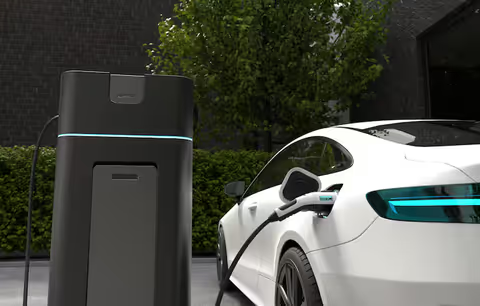
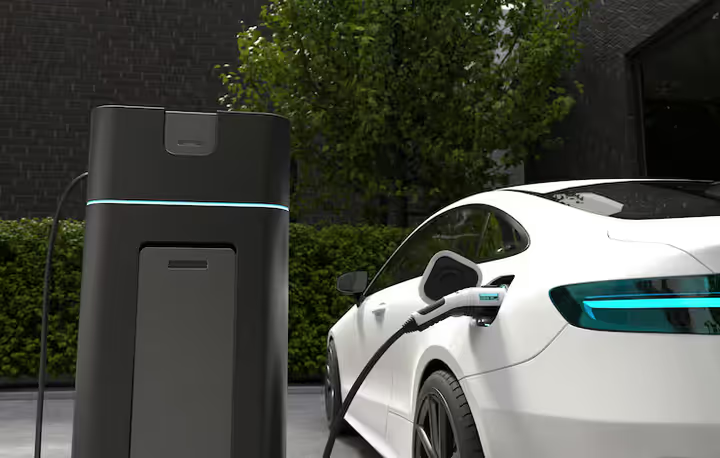
Charging is a foundational aspect of electric vehicle usage. Electric cars rely on external electricity sources to recharge their batteries, and charging options vary by speed and application.
Common charging categories include:
-
Standard AC charging
-
Fast DC charging
-
Public charging stations
-
Workplace and residential charging points
Charging time depends on battery capacity, charger type, and power output. Advances in charging networks have significantly reduced downtime, making long-distance travel more practical.
Typical Charging Time Comparison
| Charger Type | Power Level | Approximate Time |
|---|---|---|
| AC Level 1 | Low | Several hours |
| AC Level 2 | Medium | Moderate duration |
| DC Fast | High | Short duration |
Modern electric cars are increasingly compatible with multiple charging standards, improving flexibility across regions.
Recent Updates and Industry Trends
Over the past year, the electric vehicle ecosystem has experienced notable developments. Battery energy density has improved, allowing longer driving ranges. Charging networks have expanded in urban and highway locations.
Key trends observed during the last year include:
-
Wider adoption of fast-charging corridors
-
Improved battery recycling research
-
Increased focus on grid integration and load balancing
-
Software-driven vehicle efficiency enhancements
Several countries reported record electric vehicle registrations during 2025, indicating steady global momentum. Automakers are also prioritizing modular EV platforms to streamline production and innovation cycles.
Laws, Policies, and Regulatory Framework
Electric cars are influenced by national and regional policies designed to support cleaner transportation. Regulations vary by country but often focus on emissions standards, infrastructure development, and energy efficiency targets.
Common policy approaches include:
-
Emission reduction targets for transportation
-
Standardization of charging connectors
-
Road access privileges for low-emission vehicles
-
Government-backed EV infrastructure planning
Many regions have introduced long-term roadmaps aimed at gradually reducing dependence on combustion engines. These policies shape how electric vehicles are designed, deployed, and integrated into public infrastructure.
Tools and Resources for Electric Vehicle Users
Several digital tools and platforms help users understand and manage electric vehicle usage more effectively. These resources focus on education, planning, and monitoring rather than transactions.
Helpful tools include:
-
EV range estimation calculators
-
Charging station locator applications
-
Energy consumption tracking dashboards
-
Battery health monitoring software
-
Vehicle efficiency comparison tools
Example Resource Categories
| Tool Type | Purpose |
|---|---|
| Range Calculators | Estimate driving distance |
| Charging Maps | Locate nearby chargers |
| Energy Trackers | Monitor electricity usage |
| Policy Portals | Access regulatory updates |
These tools support informed decision-making and enhance day-to-day understanding of electric vehicle operation.
Ownership Experience and Daily Usage
Electric car ownership differs from traditional vehicles mainly in energy management and driving behavior. Users often adjust charging routines based on daily travel patterns rather than refueling habits.
Ownership characteristics include:
-
Quieter driving experience
-
Fewer mechanical service requirements
-
Software-based system updates
-
Energy usage awareness
Electric cars are particularly suited for predictable travel patterns, such as commuting or city driving, where charging access is consistent. Over time, familiarity with charging habits becomes part of regular vehicle usage.
Frequently Asked Questions
How do electric cars generate motion?
Electric cars use electric motors powered by battery-stored electricity to drive the wheels, eliminating the need for combustion.
Are electric cars suitable for long-distance travel?
With expanded charging networks and improved battery ranges, electric cars can support long-distance travel when routes are planned effectively.
What happens when an electric car battery degrades?
Battery capacity gradually decreases over time, but modern battery management systems are designed to slow degradation and maintain usability.
Do electric cars work in extreme weather conditions?
Electric vehicles are engineered to operate in a wide range of climates, though temperature extremes can temporarily affect efficiency.
How is electricity consumption measured in electric cars?
Consumption is typically measured in kilowatt-hours per distance unit, providing insight into energy efficiency.
Conclusion
Electric cars represent a significant evolution in transportation technology. Through advanced electric drivetrains, expanding charging infrastructure, and supportive regulatory frameworks, they address many modern mobility challenges.
As technology continues to improve, electric vehicles are becoming more adaptable to diverse driving needs. Understanding how they function, how charging works, and how policies shape their use helps individuals and organizations navigate the transition toward electric mobility with clarity and confidence.