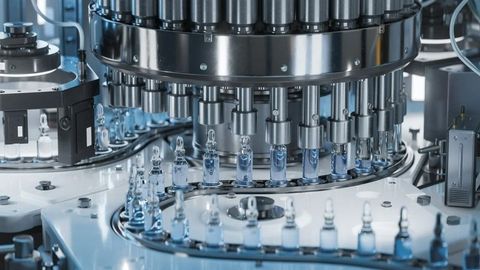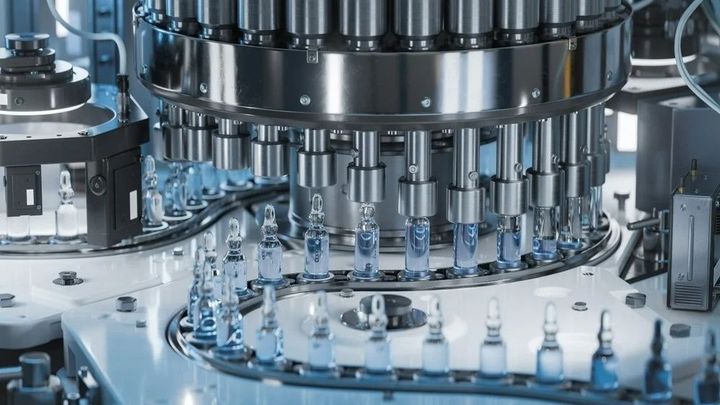
Pharmaceutical Manufacturing Trends: AI, Automation, GMP & Smart Factory
Pharmaceutical manufacturing is the controlled process used to transform active ingredients and other materials into medicines that meet defined standards for identity, strength, purity, quality, and consistency. It includes activities such as formulation, mixing, granulation, tablet production, sterile processing, packaging, testing, and quality control.
The industry exists because medicines require much tighter controls than many ordinary manufactured products. Small variations in temperature, pressure, moisture, contamination control, raw materials, or process conditions can affect product quality.
Modern pharmaceutical manufacturing therefore combines scientific processes with Good Manufacturing Practice (GMP), automation, data management, quality assurance, and validated equipment.
Traditional facilities often depend heavily on manual monitoring and batch-based production. Modern facilities increasingly use connected equipment, sensors, industrial automation, manufacturing execution systems, artificial intelligence, and real-time analytics.
A smart pharmaceutical factory can collect information from production equipment and quality systems, allowing teams to understand manufacturing conditions more quickly.
Important technologies include:
- Artificial intelligence and machine learning
- Industrial automation and robotics
- Process analytical technology
- Manufacturing execution systems
- Electronic batch records
- Internet of Things sensors
- Predictive maintenance
- Digital quality management
- Continuous manufacturing
- Automated inspection systems
- Data analytics and digital twins
The objective is not simply to automate more tasks. Automation must operate within an appropriate quality and validation framework.
Why AI, Automation, and Smart Factories Matter
Pharmaceutical manufacturing faces several complex challenges. Facilities must maintain consistent quality while managing increasingly sophisticated processes, large amounts of production data, equipment reliability, contamination risks, and regulatory expectations.
AI can help identify patterns in manufacturing data that may be difficult to detect through manual review. For example, machine-learning models can analyze process information to identify unusual behavior or support predictive maintenance.
Automation can also reduce unnecessary manual intervention in repetitive activities. Sensors and automated control systems can continuously monitor parameters such as temperature, humidity, pressure, flow, and equipment status.
Smart factory architecture connects these technologies.
A simplified manufacturing data flow can be viewed as:
| Technology Layer | Typical Role |
|---|---|
| Sensors | Collect process information |
| PLC and control systems | Control equipment |
| Manufacturing software | Track production activities |
| AI and analytics | Identify patterns and anomalies |
| Quality systems | Manage deviations and documentation |
| Human oversight | Review decisions and maintain accountability |
This structure can support pharmaceutical quality management while improving visibility across production activities.
Another important development is continuous manufacturing. Instead of producing every stage as a separate batch, continuous processes can maintain a controlled flow of materials through connected production steps. ICH Q13 provides scientific and regulatory considerations for implementing and managing continuous manufacturing for drug substances and drug products.
Smart manufacturing can also support better equipment management. Predictive maintenance systems analyze equipment information to identify potential deterioration before an unexpected failure occurs.
However, technology does not automatically guarantee quality. AI models can generate inaccurate results, automated systems can malfunction, and poorly controlled data can create compliance risks. Human review, validation, data governance, and documented procedures remain important.
Recent Pharmaceutical Manufacturing Trends
AI and advanced manufacturing have become major areas of regulatory attention during 2025 and 2026.
In January 2026, the European Medicines Agency and U.S. Food and Drug Administration published ten common principles for good AI practice across the medicines lifecycle. The principles cover areas ranging from development and clinical research to manufacturing and safety monitoring.
The EMA also published its 2025 AI Observatory report in June 2026. The report described the regulatory network's experience with AI, including automation, productivity, and data-driven decision-making.
AI in pharmaceutical manufacturing is also receiving specific regulatory attention. In June and July 2026, EMA held an expert workshop concerning potential EU guidance on AI in medicines manufacturing, known as Annex 22. Discussions included data governance, model evaluation, transparency, accountability, human oversight, and risk mitigation.
The U.S. FDA has also identified advanced manufacturing as an important area for pharmaceutical quality. Its advanced manufacturing framework includes technologies such as end-to-end continuous manufacturing, distributed manufacturing, point-of-care manufacturing, and artificial intelligence in manufacturing.
Another trend is increased attention to digital quality systems. Modern facilities are increasingly connecting manufacturing data with electronic documentation, equipment monitoring, quality investigations, and process analytics.
Key Trend Snapshot
| Trend | Main Application | Quality Consideration |
|---|---|---|
| AI and ML | Prediction and anomaly detection | Model validation and oversight |
| Robotics | Repetitive manufacturing activities | Qualification and safety |
| IoT sensors | Real-time monitoring | Data integrity |
| Digital twins | Process simulation | Model accuracy |
| Continuous manufacturing | Integrated production | Process control |
| Automated inspection | Quality examination | Validation and performance |
| Predictive maintenance | Equipment monitoring | Reliable sensor data |
These developments show a movement toward data-driven manufacturing rather than simple equipment automation.
GMP, Regulations, and Pharmaceutical Manufacturing Policies
GMP remains central to pharmaceutical manufacturing. GMP requirements are designed to ensure medicines are consistently produced and controlled according to appropriate quality standards.
Regulatory requirements vary by country, but major pharmaceutical markets generally require manufacturers to maintain documented processes, validated systems, appropriate facilities, trained personnel, controlled production environments, and reliable quality systems.
In the European Union, GMP requirements are supported through EU legislation and the EU GMP guidelines. EMA explains that these rules cover areas including medicines for human use, active substances, veterinary medicines, and investigational medicinal products.
The regulatory environment is also evolving alongside technology. During 2026, EMA worked on several GMP-related updates, including proposals concerning qualification and validation and the use of new technologies and computerized systems.
In the United States, FDA oversight focuses on current Good Manufacturing Practice requirements and risk-based approaches to pharmaceutical manufacturing. In 2026, FDA also published updated inspection-related programs and continued development of its Quality Management Maturity initiative.
For manufacturers introducing AI or automated systems, important compliance areas can include:
- Computerized system validation or assurance
- Data integrity
- Electronic records and documentation
- Change control
- Risk management
- Equipment qualification
- Process validation
- Cybersecurity
- Audit trails
- Human oversight
- Model monitoring
The regulatory direction is increasingly focused on using advanced technologies without weakening established quality principles.
Tools and Resources for Smart Pharmaceutical Manufacturing
Organizations studying pharmaceutical automation and GMP can use several categories of tools and educational resources.
Manufacturing and automation tools
- Manufacturing execution systems
- Supervisory control and data acquisition platforms
- Programmable logic controllers
- Industrial sensors
- Automated inspection systems
- Electronic batch record platforms
- Laboratory information management systems
Analytics and AI tools
- Statistical process control
- Process monitoring dashboards
- Machine-learning models
- Predictive maintenance analytics
- Anomaly detection systems
- Digital twin platforms
Quality and compliance resources
- GMP checklists
- Risk assessment templates
- Validation protocols
- Change-control templates
- Deviation investigation forms
- Corrective and preventive action templates
- Data-integrity assessment frameworks
Learning resources
- GMP guidance documents
- ICH quality guidelines
- Regulatory inspection guidance
- Pharmaceutical engineering publications
- Process validation materials
- Quality risk management frameworks
These resources can help manufacturing teams understand how technology fits into established quality systems rather than treating automation as a separate activity.
Frequently Asked Questions
What is smart pharmaceutical manufacturing?
Smart pharmaceutical manufacturing uses connected equipment, sensors, automation, data analytics, and digital systems to monitor and control manufacturing processes. Human oversight and GMP requirements remain essential.
How is AI used in pharmaceutical manufacturing?
AI can support applications such as process monitoring, anomaly detection, predictive maintenance, quality analytics, documentation analysis, and decision support. Its use should be appropriately evaluated, controlled, and monitored.
What is GMP compliance in pharmaceutical manufacturing?
GMP compliance means manufacturing activities follow applicable requirements designed to ensure medicines are consistently produced and controlled according to established quality standards.
Can AI replace human oversight in pharmaceutical production?
AI can support manufacturing decisions, but it does not automatically replace qualified human oversight. Regulatory discussions increasingly emphasize accountability, transparency, risk management, and human review for appropriate AI applications.
What is continuous pharmaceutical manufacturing?
Continuous manufacturing integrates production activities into a continuous process rather than relying entirely on separate traditional batches. ICH Q13 provides a framework for scientific and regulatory considerations associated with continuous manufacturing.
Conclusion
Pharmaceutical manufacturing is moving toward a more connected and data-driven model in which AI in pharmaceutical manufacturing, automation, GMP compliance, continuous manufacturing, and smart factory technologies work together.
Disclaimer: The information provided in this article is for informational purposes only. We do not make any claims or guarantees regarding the accuracy, reliability, or completeness of the information presented. The content is not intended as professional advice and should not be relied upon as such. Readers are encouraged to conduct their own research and consult with appropriate professionals before making any decisions based on the information provided in this article.