Laser Cladding Systems Guide: Processes and Industrial Uses
Laser cladding is an advanced manufacturing process that applies a layer of material to the surface of a component using a focused laser beam. The process creates a metallurgical bond between the added material and the underlying surface. It is widely studied for applications that require improved resistance to wear, corrosion, heat, or surface damage.
A laser cladding system generally includes a laser source, a material delivery mechanism, motion control equipment, and a protective environment where necessary. Depending on the application, the added material may be supplied as a metal powder or wire.
The laser generates concentrated heat in a small area. This heat melts the incoming material and a thin layer of the component's surface. As the material cools, it forms a solid coating that becomes firmly bonded to the base metal.
Unlike some conventional coating techniques, laser cladding can produce a relatively low-dilution layer when process parameters are properly controlled. Dilution refers to the mixing of the base material with the added material. Controlling it helps maintain the desired surface properties.
Laser cladding technology developed from advances in laser processing, metal deposition, and computer-controlled manufacturing. Today, it supports component restoration, surface engineering, and selected metal additive manufacturing applications.
Why Laser Cladding Matters in Modern Manufacturing
Industrial components often operate under demanding conditions. Heat, friction, pressure, moisture, and chemical exposure can gradually damage their surfaces. In many cases, the underlying component remains structurally usable even when its surface has deteriorated.
Laser cladding provides a method for rebuilding or modifying these surfaces without necessarily replacing the entire component. Its suitability depends on the component's condition, material compatibility, geometry, and operating environment.
Several industries use or investigate laser cladding for different engineering requirements.
Aerospace manufacturing: Surface restoration and protective layers for selected high-value metal components.
Automotive production: Wear-resistant surfaces for tooling, shafts, and other suitable components.
Oil and gas operations: Protection of selected parts exposed to abrasion, corrosion, and demanding operating conditions.
Power generation: Surface engineering for certain turbine, valve, and energy equipment components.
Heavy machinery: Restoration of worn industrial parts and improvement of surface durability.
Medical manufacturing: Research and specialized applications involving metal components that require controlled surface properties.
Laser cladding can also reduce the amount of additional material applied compared with some broad-area coating approaches. However, the actual material usage and environmental impact depend on deposition efficiency, energy consumption, powder recovery, finishing requirements, and component life.
Main Laser Cladding Processes
Laser cladding systems use different material delivery methods. The most suitable process depends on the required coating, component shape, production volume, and material characteristics.
Powder-Based Laser Cladding
Powder-based laser cladding introduces fine metallic particles into the laser-generated melt pool. A delivery nozzle directs the powder toward the processing area, where the laser melts it and bonds it to the substrate.
Common powder materials include nickel-based alloys, cobalt-based alloys, iron-based alloys, and selected stainless steels.
This process allows flexible control over coating composition and is useful for complex surface treatments. However, powder flow, particle size, laser power, and nozzle position must be controlled to achieve consistent results.
Wire-Based Laser Cladding
Wire-based systems feed a metal wire into the heated processing zone. The laser melts the wire and bonds the deposited material to the component.
Wire deposition can provide high material utilization because the feedstock is delivered directly into the processing area. It may also simplify material handling in some industrial environments.
The method requires suitable wire feeding, stable positioning, and careful control of the melt pool. Its suitability depends on the component geometry and the required layer thickness.
Laser Metal Deposition
Laser metal deposition is a broader category of directed energy deposition in which focused thermal energy melts material as it is added to a component. Laser cladding is closely related to this technology and is frequently used for surface modification or repair.
The process can build material onto selected regions rather than covering an entire component. This makes it useful for restoring edges, rebuilding worn surfaces, or producing features on existing parts.
Comparison of Laser Cladding Methods
Feature | Powder-Based | Wire-Based |
|---|---|---|
Material feed | Metallic powder | Metal wire |
Material flexibility | Broad alloy selection | Depends on available wire grades |
Material handling | Requires powder management | Requires wire feeding |
Typical strengths | Flexible deposition and complex coatings | Direct feed and potentially high material utilization |
Main considerations | Powder flow and particle capture | Wire positioning and feed stability |
Suitable applications | Surface protection and localized repair | Selected repairs and controlled material deposition |
Neither method is universally superior. Process selection should be based on engineering requirements, metallurgical compatibility, equipment capabilities, and the desired final surface.
Important Equipment and Process Parameters
A laser cladding system combines several components that must work together to produce a consistent deposited layer.
The laser source determines the available energy and beam characteristics. The material delivery system controls how powder or wire enters the processing zone. Motion equipment moves the component or processing head along a defined path.
Sensors and monitoring equipment may track temperature, melt-pool behavior, material delivery, and other process conditions.
Important operating parameters include:
Laser power: Influences how much energy reaches the processing zone.
Scanning speed: Determines how quickly the laser moves across the surface.
Feed rate: Controls the amount of powder or wire introduced.
Beam size: Affects the distribution of heat and the width of the deposited track.
Track overlap: Helps create a continuous layer between adjacent deposition paths.
Shielding gas: May protect the molten material from unwanted atmospheric reactions.
Cooling conditions: Influence microstructure, residual stress, and the possibility of cracking.
These parameters interact with one another. Increasing laser power, for example, does not automatically improve coating quality. Excessive heat can increase dilution, distortion, or other defects.
Recent Developments in Laser Cladding Technology
Developments during 2025 and 2026 have continued to emphasize process monitoring, automation, material efficiency, and integration with digital manufacturing. Specific capabilities vary by equipment and application, so individual systems should be evaluated using documented performance data.
Real-Time Process Monitoring
Industrial laser processing increasingly uses cameras, optical sensors, temperature measurements, and other monitoring technologies to observe the deposition process.
These systems can help identify changes in melt-pool behavior and detect conditions associated with inconsistent deposition. Monitoring data may also support quality documentation and process improvement.
However, a sensor does not automatically guarantee defect-free components. Reliable inspection still requires validated methods and appropriate acceptance criteria.
Artificial Intelligence and Data Analysis
Machine learning is being investigated for process classification, defect detection, parameter optimization, and analysis of manufacturing data.
For laser cladding, these methods may help identify patterns that are difficult to recognize through manual observation alone. Their performance depends on representative training data, sensor quality, and validation against actual component results.
Artificial intelligence should complement established engineering controls rather than replace material testing or qualified inspection.
Robotic Deposition and Automation
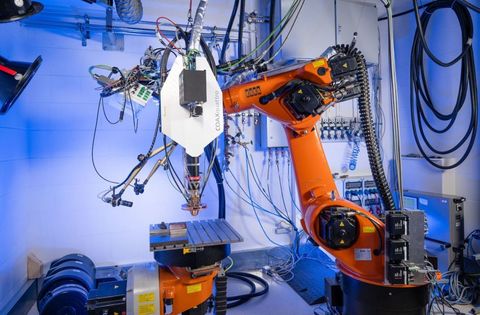
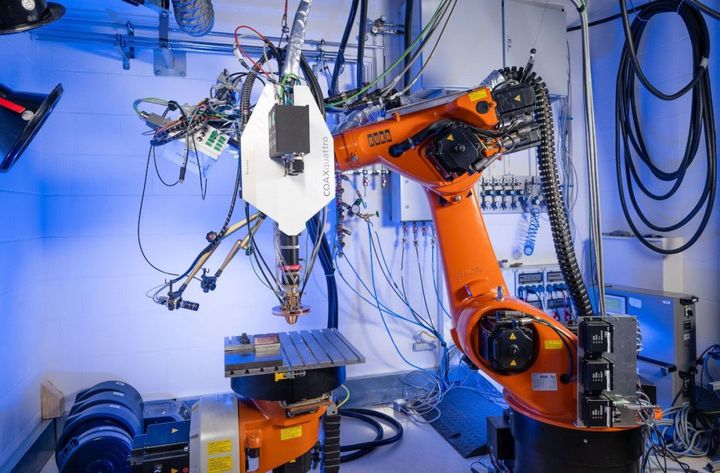
Robotic laser cladding allows the processing head to follow programmed paths across complex surfaces. Multi-axis movement can support components with curved profiles or difficult-to-reach areas.
Automation can improve repeatability when part positioning, tool paths, and process parameters are properly established. It also introduces requirements for robot calibration, collision avoidance, and coordinated safety systems.
Integration With Additive Manufacturing
Laser cladding and directed energy deposition are increasingly relevant to hybrid manufacturing. In these arrangements, material can be deposited onto an existing component before machining or finishing.
This approach may help restore dimensions, add localized features, or modify a component's surface. The final result still depends on machining accuracy, metallurgical integrity, and inspection.
Laws, Regulations, and Industrial Safety
Laser cladding operations must follow the safety and manufacturing requirements applicable to their location, equipment, and industry. There is no single global regulation that covers every laser cladding application.
In the United States, workplace requirements administered by the Occupational Safety and Health Administration can apply to laser hazards, machine guarding, hazardous materials, ventilation, and worker protection. Relevant laser safety standards may also guide system design and operation.
Internationally, the IEC 60825 series addresses laser product safety. ISO 11553 covers safety requirements for laser processing machines. Applicable editions and national adoptions should be checked before equipment is installed or operated.
In India, the Factories Act framework and applicable state factory rules have historically addressed industrial workplace safety. The Occupational Safety, Health and Working Conditions Code, 2020, is also relevant to India's evolving occupational safety framework. Employers should verify the provisions, commencement notifications, and state requirements applicable to their operations.
Important safety measures include:
Enclosing the laser processing area where required.
Using suitable laser-rated viewing windows and protective equipment.
Installing interlocks and emergency stopping systems.
Providing ventilation and extraction for fumes and airborne particles.
Following safe procedures for combustible metal powders.
Training operators in equipment use, maintenance, and emergency response.
Documenting inspection, maintenance, and quality-control procedures.
Additional requirements may apply to aerospace, medical, pressure-containing, or other regulated components. Manufacturers should establish traceability and testing procedures appropriate to the component's intended use.
Tools and Resources for Laser Cladding
General engineering tools can help teams plan, monitor, and evaluate laser cladding operations without relying on trial and error alone.
Process planning software can help define deposition paths, movement sequences, and geometric requirements. Simulation tools may estimate thermal behavior, distortion, and residual stress, although predictions require validation.
Material databases help engineers compare alloy composition, melting behavior, hardness, corrosion resistance, and compatibility with the substrate. Actual performance must be confirmed through suitable testing.
Laser safety assessment tools can support hazard identification, enclosure planning, protective equipment selection, and operating procedures. Assessments should be completed by competent personnel.
Inspection and measurement tools include optical inspection systems, dimensional measurement equipment, hardness testers, and appropriate non-destructive testing methods. The inspection technique should match the expected defect type and component requirements.
Process documentation templates can record laser power, scanning speed, feed rate, shielding conditions, material batch details, and inspection results. Consistent records make it easier to investigate deviations and reproduce validated processes.
Training resources should explain laser hazards, powder or wire handling, equipment maintenance, metallurgical fundamentals, and emergency procedures. Operators also need practical training specific to the installed system.
Frequently Asked Questions
What is the main purpose of a laser cladding system?
Its main purpose is to deposit a metallurgically bonded layer onto a metal component. The layer may improve surface properties, restore worn dimensions, or provide localized material reinforcement.
Which materials are commonly used in laser cladding?
Common materials include nickel-based, cobalt-based, iron-based, and stainless-steel alloys. The appropriate choice depends on the base material, operating temperature, corrosion exposure, wear conditions, and required mechanical properties.
How does laser cladding differ from conventional welding?
Both processes use heat to melt material and can create metallurgical bonds. Laser cladding generally focuses on depositing a controlled surface layer, while conventional welding often joins separate components or fills larger gaps. The distinction depends on the specific process and application.
Can laser cladding restore worn industrial components?
Yes, it can restore selected worn surfaces when the remaining component is suitable for repair. Engineers must assess cracks, material degradation, dimensional requirements, and the integrity of the deposited layer before returning a component to operation.
What determines laser cladding quality?
Quality depends on material compatibility, laser power, travel speed, feed rate, surface preparation, shielding, and cooling conditions. Inspection and testing are needed to confirm that the finished component meets its engineering requirements.
Conclusion
Laser cladding systems are an important part of modern surface engineering and advanced manufacturing. By depositing material directly onto selected regions of a component, they can support surface protection, dimensional restoration, and specialized metal deposition.