Industrial Curing Oven Resources: Modern Curing Systems and Processes
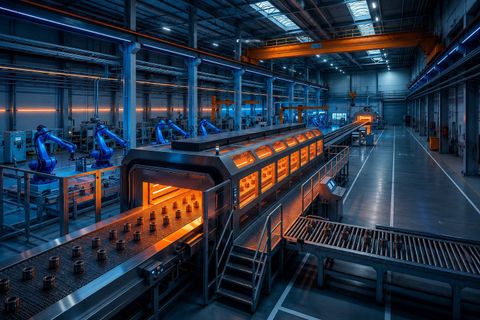
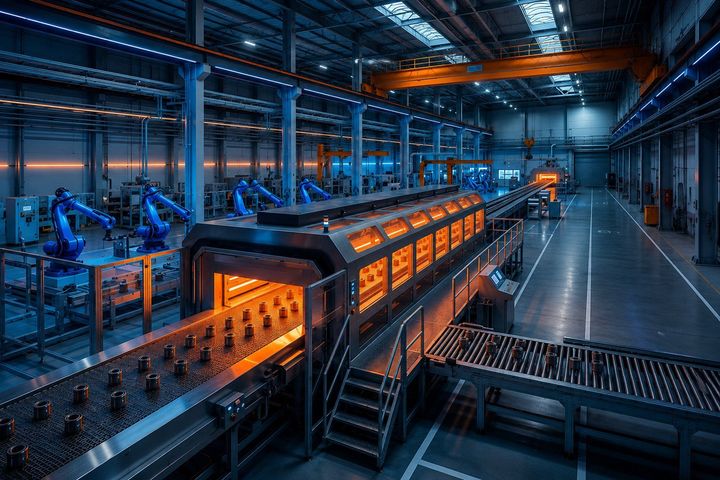
Industrial curing ovens are enclosed heating systems designed to provide controlled temperatures for curing or hardening materials. Curing may involve drying, chemical cross-linking, polymerization, or other heat-assisted processes that change a material's physical or chemical properties.
These systems are widely associated with industrial coating processes. They can also be used with composite materials, adhesives, rubber products, electrical components, fabricated metal parts, and other manufactured products. Depending on the material, curing can take place at relatively moderate temperatures or at considerably higher temperatures.
The basic principle is straightforward. A component is placed inside a controlled heating environment. The oven raises the material to a specified temperature and maintains suitable conditions for a defined period. After the curing cycle, the component may be cooled before the next manufacturing stage.
Modern curing systems can use different heating approaches, including convection, infrared radiation, or combinations of heating methods. Air circulation, temperature sensors, insulation, control systems, and exhaust arrangements all influence how evenly and efficiently an oven performs.
Industrial curing oven resources are therefore useful for understanding equipment selection, process planning, temperature monitoring, maintenance, energy management, and workplace safety.
Importance
Reliable curing is important because temperature and time can directly influence the final characteristics of a material. Insufficient curing may leave a coating or adhesive under-cured, while excessive heat can damage sensitive materials.
Modern curing systems help manufacturers manage several common process challenges:
- Maintaining consistent temperatures
- Reducing temperature variation inside the chamber
- Controlling curing time
- Supporting repeatable production processes
- Managing heat distribution
- Monitoring process conditions
- Improving energy management
- Supporting workplace safety
- Recording process information for quality control
The topic also matters because industrial energy use is receiving greater attention. Heating equipment can represent a significant part of energy consumption in some manufacturing environments. Better insulation, optimized airflow, accurate temperature control, and appropriate heating strategies can help reduce unnecessary energy use.
Industrial curing ovens affect many industries. Metal fabrication and finishing operations may use ovens for powder coating. Composite manufacturers may use controlled heating for resin systems. Electronics and electrical production can involve heat-curing materials such as coatings, encapsulants, or adhesives.
Understanding curing processes is also important for engineers, production planners, maintenance teams, quality personnel, and operators. A suitable curing profile must consider the material, component geometry, oven design, loading pattern, airflow, and required final properties.
Recent Updates
During 2025 and 2026, industrial heating discussions have increasingly focused on energy efficiency, automation, process monitoring, and emissions management. These developments reflect broader changes across manufacturing rather than one specific oven technology.
One important trend is greater use of digital temperature monitoring. Modern control systems can collect temperature information from multiple locations and compare actual conditions with the intended curing profile. This can help identify temperature variations that may not be visible from a single chamber sensor.
Another development is improved automation. Programmable controllers can coordinate heating, airflow, exhaust, alarms, timers, and cooling stages. Some systems can also store process data for quality documentation and troubleshooting.
Energy management has also become a stronger consideration. Manufacturers are examining insulation quality, burner or heater efficiency, airflow patterns, heat recovery, and standby operation. In suitable applications, infrared heating can provide targeted energy transfer, while convection systems can provide more uniform heating for particular load configurations.
There is also growing interest in connected manufacturing systems. Industrial ovens may be integrated with broader production monitoring environments, allowing operators to review operating conditions and identify abnormal temperature behavior.
Environmental considerations are another continuing trend. Where combustion-based heating is used, exhaust management and combustion efficiency can influence overall environmental performance. Electrification may also be considered where plant infrastructure and process requirements make it practical.
The exact technology selected still depends on the application. A curing process for a large metal component can have very different requirements from one designed for a small composite or electronic component.
Laws or Policies
Industrial curing ovens are affected by several categories of regulations. The exact requirements depend on the country, industry, fuel type, workplace conditions, and materials being processed.
In India, industrial heating equipment may fall under workplace safety, electrical safety, environmental, fire-safety, and emissions-related requirements. Facilities should review applicable national, state, and local rules before installing or modifying industrial heating equipment.
For combustion-based systems, ventilation and exhaust arrangements are particularly important. Proper combustion controls can help manage hazardous gases and maintain suitable working conditions.
Workplace safety requirements may also address:
- Machine guarding
- Electrical protection
- Emergency shutdown systems
- Fire prevention
- Hot-surface protection
- Ventilation
- Operator training
- Maintenance procedures
- Hazard identification
Where coatings, solvents, adhesives, or other chemical materials are cured, additional environmental and occupational requirements may apply. Facilities should evaluate the materials used in the process and determine whether vapors, fumes, or other emissions require specific controls.
International manufacturers may also encounter technical standards covering industrial ovens, electrical systems, combustion equipment, explosion protection, and workplace safety. Standards should be selected according to the actual application rather than assumed to apply universally.
Because regulations can change, organizations should verify current requirements with the appropriate government authority, qualified safety professional, or regulatory specialist before implementing an industrial curing process.
Tools and Resources
Several general tools can help users understand and manage industrial curing processes. The most useful resources usually combine process knowledge with practical measurement.
Temperature monitoring tools:
Thermocouples, temperature probes, data loggers, and multi-point monitoring equipment can help evaluate temperature distribution inside an oven.
Thermal profiling tools:
A thermal profile records temperature against time during a curing cycle. It can help identify whether different areas of a component or oven reach the intended curing conditions.
Energy calculators:
Heating-load and energy-use calculators can provide estimates based on material mass, temperature change, heating time, insulation, and other process variables.
Airflow assessment tools:
Airflow measurement instruments can help evaluate circulation and identify areas where heating may be uneven.
Maintenance checklists:
Routine checklists can cover heaters, burners, fans, insulation, sensors, controls, doors, exhaust systems, alarms, and emergency shutdown equipment.
Process documentation templates:
Simple templates can record batch information, target temperature, curing time, actual temperature readings, inspection results, and operator observations.
Learning resources:
Technical manuals, industrial safety guidance, engineering textbooks, material manufacturer documentation, and government regulatory publications can provide useful background information.
A practical curing-oven assessment should consider the complete process rather than focusing only on the oven's maximum temperature. Heating uniformity, material requirements, loading arrangement, cycle duration, ventilation, safety systems, and maintenance can all influence performance.
Common Industrial Curing Oven Types
Different applications require different heating methods. Common categories include convection ovens, infrared ovens, electric curing ovens, and gas-heated systems.
| Oven Type | Main Heating Approach | Typical Consideration |
|---|---|---|
| Convection Oven | Heated air circulation | Useful for controlled, uniform heating |
| Infrared Oven | Radiant heat | Can provide rapid surface heating |
| Electric Oven | Electrical heating elements | Precise temperature control can be possible |
| Gas-Heated Oven | Combustion-based heating | Requires appropriate combustion and exhaust controls |
| Hybrid System | Combination of methods | Can match heating characteristics to process needs |
The appropriate design depends on material properties, component size, required temperature, production cycle, ventilation requirements, and desired process control.
Frequently Asked Questions
What is an industrial curing oven?
An industrial curing oven is a controlled heating chamber used to cure, harden, dry, or chemically transform materials such as coatings, adhesives, composites, and other industrial products.
What temperature is required for curing?
There is no single curing temperature. The required temperature depends on the material and its technical specifications. The recommended curing profile should come from the relevant material documentation and process requirements.
How does temperature uniformity affect curing?
Temperature uniformity can affect the consistency of the finished material. Significant differences between areas of an oven may cause some parts to cure differently from others.
Which heating method is appropriate for an industrial curing process?
The appropriate method depends on the material, component geometry, required temperature, heating rate, airflow requirements, and production conditions. Convection, infrared, electric, and combustion-based approaches each have different characteristics.
How can an industrial curing oven be monitored?
Temperature sensors, data loggers, thermal profiling equipment, control systems, and inspection records can be used to monitor curing conditions. Multi-point measurements can provide a clearer picture of temperature distribution.
Conclusion
Industrial curing ovens play an important role in controlled manufacturing processes where heat is needed to develop the required properties of coatings, adhesives, composites, and other materials. Their performance depends on more than heating capacity. Temperature uniformity, airflow, cycle control, insulation, monitoring, maintenance, and safety systems all contribute to reliable operation.